




Eighteen expert volunteers from the EU, supported by three sending organisations from Slovakia, France and Estonia, successfully completed their work in eight low-income countries in the fields of human rights, psychosocial support for refugees, education, health and healthy nutrition, livelihoods and gender equality. More than a thousand individuals have benefited from their activities.
ADRA Slovakia within the project „Humanitarian Volunteers in Action“ Humanitarian Volunteers in Action) has sent 5 EU volunteers, namely from Germany, Spain, France and Italy, for a period of about one year. They used their expertise to strengthen the professional capacity of their host organisations and the local community, to develop new projects, strategies, marketing, as well as direct assistance to locals, in Albania, Georgia and Turkey.
Applying European expertise to development aid in the Global South
Volunteer Arancha from Spain provided physiotherapy to 30 clients of the community centres of its host organisation NCCS in Albania, who have functional mobility disorders and, due to social exclusion or economic problems, do not have access to this type of health care. „I saw how they made progress thanks to our exercises and they also shared with me how they can be more independent at home, walk more without the help of others or have more confidence in performing certain activities.,“ Arancha summarised the results.

Two other volunteers, Cyriakus from Germany and Laura from Italy, professionalized the work of their host organization ADRA Albania in the area of project management in order to sustain the organization's programs that help vulnerable communities of Roma and Egyptian families in Tirana in the area of increasing children's school attendance, as well as increasing reading, numeracy and social competences of adults. The volunteers also came up with its own awareness-raising campaign, when they introduced the importance of education to more than 500 children and parents from these communities through puppet shows, strengthening cooperation with other local organisations and supporting social enterprise.
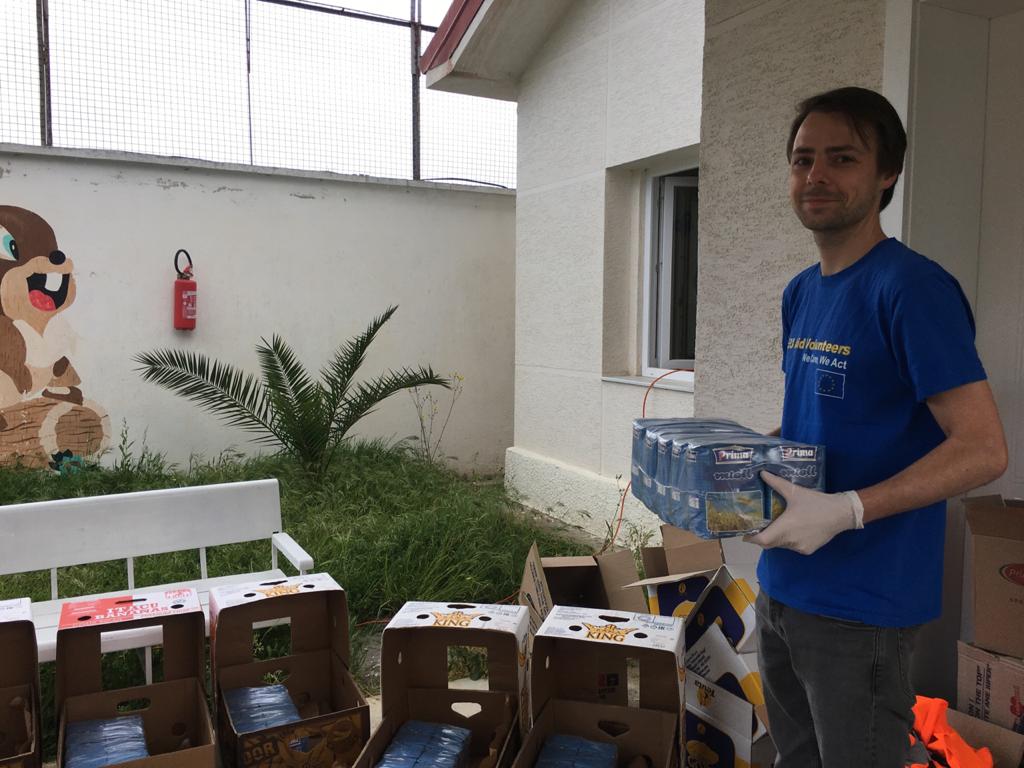
EU Aid volunteers in Albania have been directly involved in humanitarian intervention in addition to development aid. For the first time during the severe earthquake in late 2019, they were involved in psychosocial support for 3,500 children and adults in addition to material assistance in the immediate aftermath of the earthquake. In a similar way, the were also involved last year when the coronavirus pandemic.
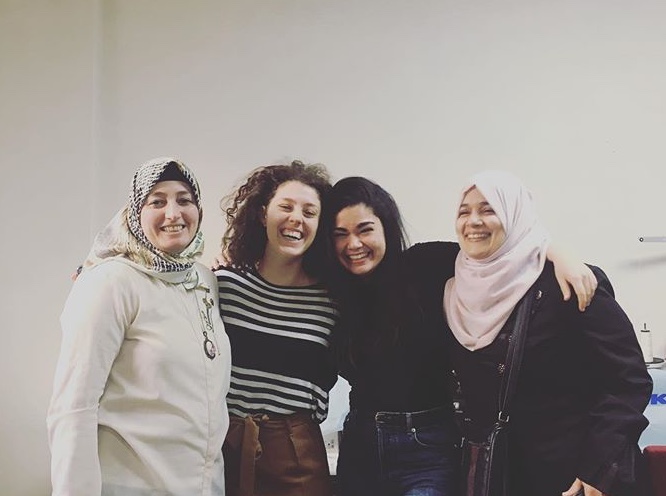
Aya from France acted as volunteer in Turkey at SPI, which runs Muhra, a social enterprise employing women from the Syrian refugee community. Aya has taken on the task of improving Muhra's sales position in both local and international markets. „We achieved our highest sales during Christmas, which was more than in almost three years of Muhra's operation combined. Working with the women working in the business was an irreplaceable experience for me,“ Aya summed up the moments of her tenure.
Capacity building and intercultural understanding of all participants
The impact of an EU Aid volunteer's deployment is multifaceted and leaves its mark even after he/she has left. In addition to the impact on the local communities, this project has also taken care to strengthen the capacity of the staff of the beneficiary organisations. Volunteers trained local teams, implementing sustainable processes in the organisations. „Her previous experience has helped us to create better project applications and expand our network of partnerships“, said Kristi Quendro, Programme Director of ADRA Albania.
The actual sending of volunteers in this project was complemented by several trainings provided by the sending organisations ADRA Slovakia, Mondo from Estonia and ADICE from France on project management, needs assessment tools, impact evaluation, etc.„A comprehensively structured needs assessment process is very useful for our future projects. With better tools and plans, we will be able to improve results,“ said a representative of one of the beneficiary organisations and a participant training.
„This opportunity represented the next step in gaining professional work experience that can lead to future career opportunities in international organisations. I have gained many skills and working in a multicultural team has strengthened my organisational skills and helped me to prioritise my tasks,“ She said volunteer Laura. Her words are confirmed by a representative survey of a sample of 300 EU Aid volunteers, where a third of them confirmed that they had been employed in the humanitarian sector after completing the programme.
The project „Humanitarian Volunteers in Action“ was implemented with the participation of 10 partners from different countries. „Compared to other programmes, this transcontinental cooperation also brings great added value in the mutual deepening of knowledge, experience and understanding of local issues in different regions of the world and their overlap with global challenges, which translates into building European expertise,“ says the project manager ADRA Slovakia, Nikola Gurgolova.

Unique representation of Slovakia in the EUAV initiative
Humanitarian non-profit organisation ADRA Slovakia is the only Slovak organisation that has successfully certified and deployed expert development and humanitarian volunteers to low-income countries as part of the European EU Aid Volunteers initiative. The organisation has now completed its second project under the EUAV banner and has built on this success in a third project called „Sustainable Development through Humanitarian Volunteers 3“. Sustainable Development through Humanitarian Aid Volunteers 3), which currently includes a volunteer from Spain working in the field of physiotherapy in Albania and a volunteer from Slovakia with expertise in project management and volunteer management.
Each secondment shall be carried out in close coordination between the sending and receiving organisations. Their cooperation consists of selection, recruitment of suitable candidates, training and mentoring of the EU Aid volunteer(s). The preparation process consists of (1) a preparatory visit of the sending organisation to the place of deployment, where security conditions are verified, the host organisation's readiness is checked, the volunteer's plan of activities is adapted, potential changes are made, and a visit to the local community or beneficiaries of the intervention is organised.
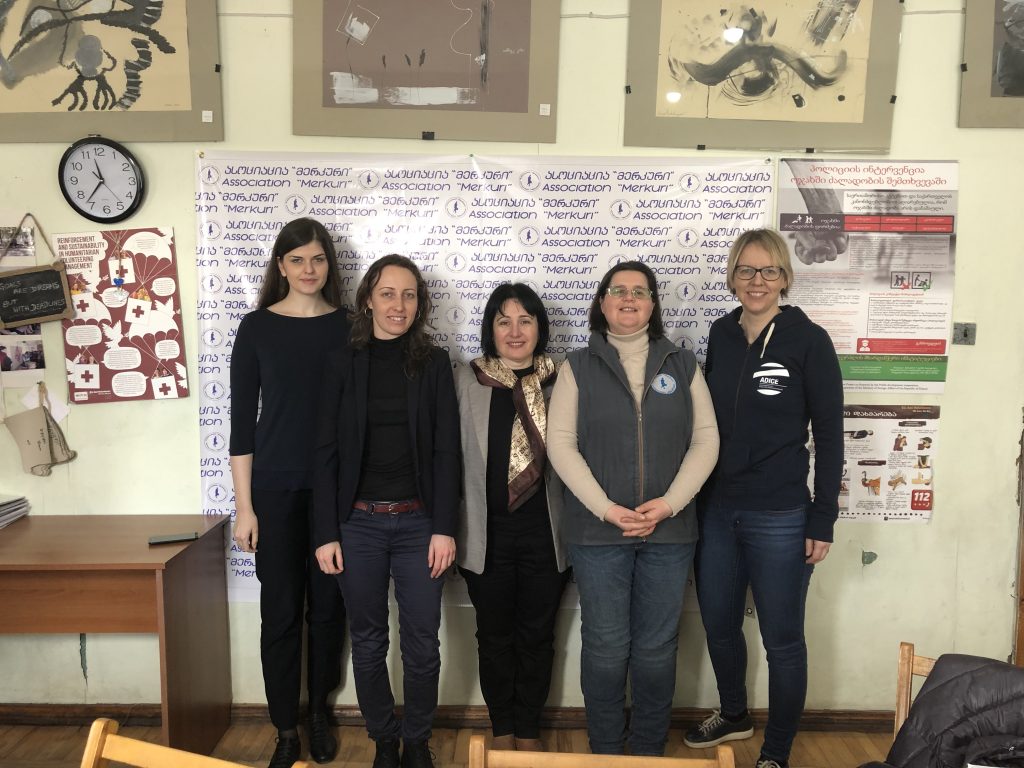
Lessons learned from the pre-trip are then also applied (2) during the volunteer's pre-trip training. In the next phase, the secondment includes a safety briefing of the volunteer and training by the host organisation. Finally, the secondment includes continuous monitoring of the EU Aid volunteer's activities by both the sending and receiving organisation, consisting of a monitoring visit, mentoring throughout the secondment, an evaluation interview at the midpoint of the secondment. Finally, an overall evaluation of the secondment itself is carried out.
Program EU Aid Volunteers (EUAV) represents the European Community's efforts to help low-income countries. The initiative brings together volunteers and organisations from different countries in common project areas such as resilience building, disaster risk management and linking relief, rehabilitation and development as a practical expression of solidarity with communities vulnerable to humanitarian crises. The opportunity to act as an expert volunteer is open to all EU citizens, including long-term residents, with no age limit and regardless of the sending organisation's country of residence.
_____________________________________________________________________________
The programme is funded by the European Commission and managed by the EACEA (Education, Audiovisual and Culture Executive Agency), DG ECHO (Directorate-General for Civil Protection and EU Humanitarian Aid Operations) and, from 2021, DG EAC (Directorate-General for Education, Youth, Sport and Culture).
Watch videos of our volunteers directly from the field:
_____________________________________________________________________________
Project Humanitarian Volunteers in Action (Humanitarian Volunteers in Action) is funded by the European Commission under the initiative EU Aid Volunteers and managed by the European Education and Culture Executive Agency (EACEA) in cooperation with the EU's Directorate-General for Civil Protection and Humanitarian Aid Operations (DG ECHO) and, from 2021, the Directorate-General for Education, Youth, Sport and Culture (DG EAC).

 EN
EN  SK
SK