




Helping the needy in areas in humanitarian crisis can also be done by sending humanitarian volunteers directly to places affected by war, earthquake or typhoon. However, the deployment itself is preceded by thorough preparation, which ADRA Slovakia takes great care of.
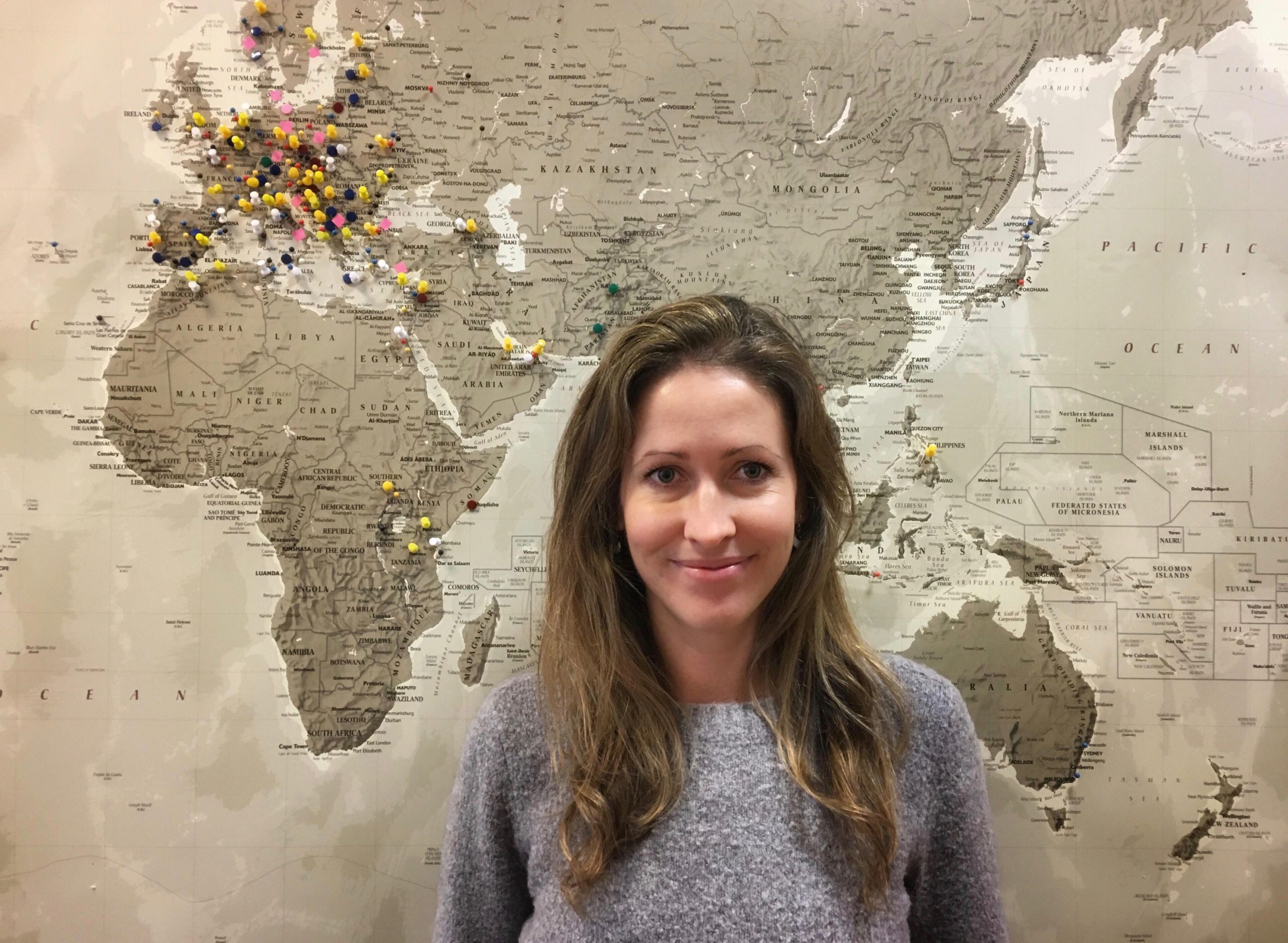
The humanitarian and development organisation ADRA Slovakia was the first Slovak NGO to join the „EU Aid volunteers“ initiative, launched by the European Commission some time ago. This was a logical step, as it has long been involved in building meaningful volunteering both at home and around the world. Until now, it has been preparing young people for its „missions“ to so-called developing countries. Recently, it has expanded its portfolio to include the management of humanitarian volunteers. In an interview, ADRA Slovakia's project manager, Alena Horváthová, explains what the preparation for such a volunteer stay in a country plagued by a humanitarian crisis looks like.
Why has the European Commission embarked on a project to train and deploy humanitarian volunteers in the form of the EU Aid Volunteers initiative?
The European Commission, as the main donor of the project, with its slogan: „We care. We act.“ expresses its objective clearly enough - to intervene wherever a natural disaster or social conflict requires intervention. Because it concerns us all and we in Slovakia should also be in solidarity with the needy. And always, not just once a year - in the run-up to Christmas. Every year, events such as typhoons, floods, extreme drought, landslides, earthquakes, wars and civil wars deprive millions of people, especially in the Global South, of shelter, food, work, security and the ability to provide for their families.
What is your personal story in volunteering?
Already during school and then alongside my work, I was involved as a volunteer in various activities at home and abroad. This year, for example, I helped with a study support program for children in India, and last year I participated in a food collection for the needy in Slovakia. At ADRA Slovakia, I have been managing the HVM (Humanitarian volunteering management) project for two years, which builds the capacity of NGOs that would like to train and send humanitarian volunteers to post-conflict countries.
How can such volunteers (mostly young people) help in humanitarian aid?
This aid varies depending on the country to which it goes. The exact workload of the volunteer is always agreed with the partner host organisation where the volunteer is going, depending on their needs and the current situation. The person sent is then involved in providing effective assistance, i.e. providing basic survival needs for disaster victims, saving lives and the subsequent reconstruction of the country, but also in preventing similar situations from occurring.
How many volunteers have you sent to the so-called developing countries as ADRA Slovakia so far?
We sent (under the SlovakAid banner) twenty-four people to communities of internally displaced people in Georgia, members of the Roma community in Albania, typhoon victims in the Philippines, socially excluded families in Kenya, budding activists in Ukraine, migrants in Lebanon, traumatized people after the war in Bosnia and Herzegovina, etc... But it was all about development volunteers and women volunteers. Their job description and the actual training is different from that of suitable candidates in humanitarian volunteering. Just as immediate humanitarian aid differs from long-term development cooperation, so do the missions of the people sent differ.
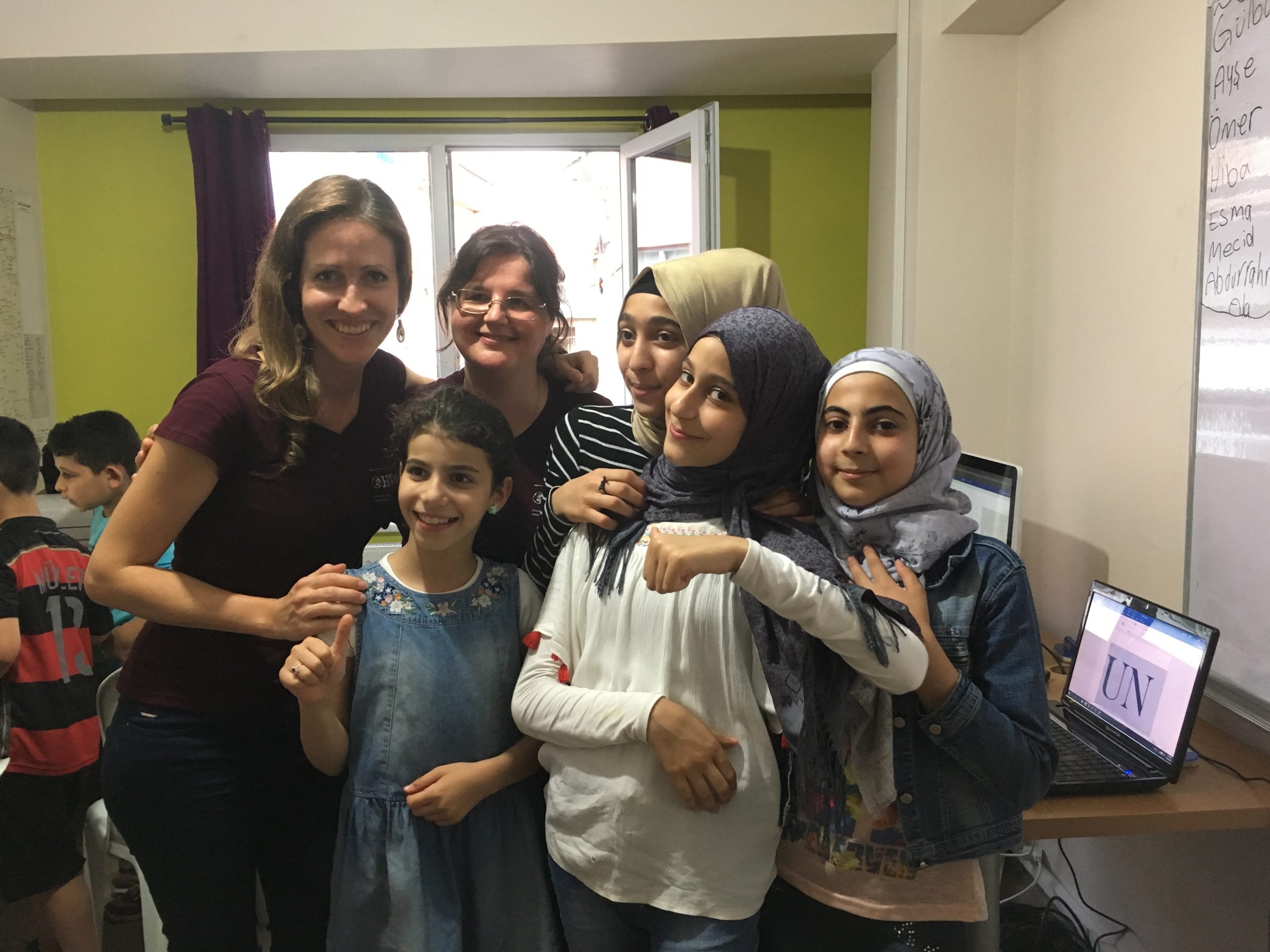
You mentioned Georgia, which has a history of military conflict with Russia from ten years ago, and there were elections there this year. How can Slovakia help this post-Soviet country through volunteering?
In Georgia, due to two frozen conflicts, there is a high number of internally displaced persons, so-called IDPs. We currently have a volunteer in Tserovani near Tbilisi - a place where more than eight thousand such displaced people and their descendants have been living in two thousand houses since 2008. She works for For Better Future, an organisation made up of displaced women themselves. For example, they run a sheltered workshop for the production of original enamel jewellery. Our volunteer Martin takes care of supporting and making more visible the activities of this social enterprise, promoting its idea and products. He is also in charge of leisure activities and teaching English to local children. Thanks to his experience in PR and HR, these days he is preparing a plan of meetings where he would teach unemployed youth and other jobless adults how to effectively write a CV and a cover letter, how to prepare for a job interview, how to improve communication skills. Indeed, there are still many areas for improvement and many topics in which a volunteer with his/her expertise can get involved.
In the framework of the EU Aid Volunteers initiative (and the HVA project - Humanitarian Volunteers in Action) send volunteers to Albania in a few weeks. What is your experience with this country?
Thanks to the excellent cooperation with our partner organisation ADRA Albania, we have been able to send several volunteers there in the past. Always the job description depended on the discussion with the partner organization and the needs of the community. Thanks to the pre-departure preparation and mentoring, we don't worry so much about safety. We always receive positive reports from the stays. Now we had a volunteer, Veronika, who worked in the village of Fushe-Kruje with local socially excluded children in inclusive education and animation. Recently, the local young male and female activists marched through the village proclaiming the slogan: „Dua Shkolle!“ (translated: „I want school!“), making it clear to all adults that education matters to them and cannot be broken. Her work and motivation of Roma boys and girls to attend school regularly is bearing fruit.
Which humanitarian crisis did people from Slovakia pay the most attention to and where did you send your volunteers?
We are still close to Ukraine, and therefore also to the crisis there, where we have also been involved as ADRA in humanitarian aid, development cooperation in the form of capacity building of the civil sector and sending volunteers. We have sent one volunteer there now as well. Another has recently returned from the Philippines, which marked five years since Super Typhoon Haiyan struck in early November. Our director was also there for two months to volunteer. ADRA set up a public collection to help rebuild the country, in which people in Slovakia actively participated. We were dedicated to educating fishermen and prevention so that repeated disasters (due to climate change) in the future would not cause so much damage and loss of human life.
So how did the mentioned project of humanitarian volunteer management HVM, in which you were also involved in ADRA Slovakia, look like in practice?
The project was designed to help recipient organisations improve their processes and systems for managing humanitarian volunteers. For this purpose, trainings were developed on topics such as: field safety; identifying the needs of the organisation and volunteer logistics; volunteer management and awareness raising on humanitarian projects. Experts from the sending organisations assisted the organisations in the development of internal documents (safety manual, evacuation plan, communication strategy, etc.) and documents needed for certification through online mentoring by experts from the sending organisations. Our ADRA was one of the sending NGOs.

The HVM project is over. What will happen after its completion?
In the summer, our ADRA was the only one in the Slovak Republic to be certified by the EC for sending humanitarian volunteers through the „EU Aid Volunteers“ initiative as a safe and quality sending organization. The HVM project focused on building the internal capacities of the participating organisations (in this case there were ten of them). The ongoing HVA (Humanitarian Volunteers in Action) project is now about the actual sending and recruitment of experienced junior and senior humanitarian volunteers. These will be selected these days and will travel to the host organisations in July 2019.
What does the pre-departure training consist of for selected people before they are actually deployed?
The selected candidates are familiar with humanitarian aid and EU interventions in countries where a humanitarian crisis - whether caused by human action or natural disaster - has occurred or is ongoing. A separate module is devoted to health and safety at work, where volunteers are introduced to the principles and safety rules, as well as possible evacuation scenarios. It is also important to understand the project management of the organisation and the implementation of humanitarian projects on the ground. Without familiarity with intercultural sensitivity, but also with PR and communication methods, this would also not be possible - as news from a humanitarian mission needs to be reported - not only to loved ones and one's own organisation, but also to the media, donors and the general public. ADRA Slovakia still requires volunteers to have a two-month pre-deployment experience directly in our office in order to understand the objectives and activities of the organisation.
What should be the desired outcomes of the EU Aid Volunteers programme?
Already during the online mentoring and well-set up monitoring we can work together with the volunteer to achieve the goals of the placement that we have agreed together before the placement. A well-prepared and implemented volunteer placement should be beneficial for all parties involved, i.e. not only for the placement itself, but also for the sending and receiving NGO. Not forgetting the local people themselves - the beneficiaries of the aid. Of course, in a region beset by a humanitarian crisis, everything can go wrong and the stay is extremely difficult, with many factors to keep track of at once. But project mistakes, unwanted situations, cultural missteps and security risks can all be eliminated by good management of humanitarian volunteers.
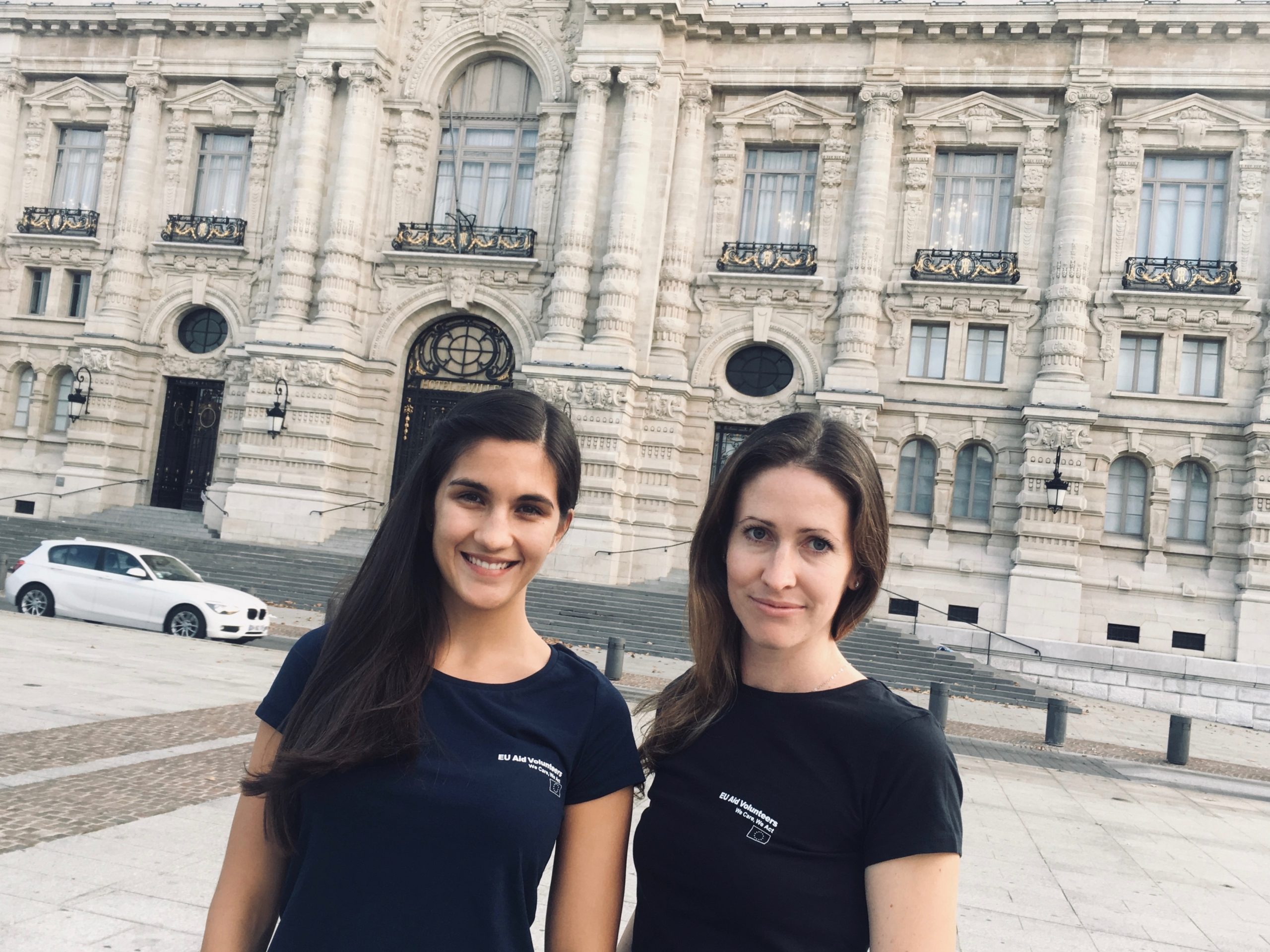
How to prevent ineffective volunteering outside the EU?
By reading the real needs of the organization, recognizing the motivation of the volunteer before the trip, preparing the volunteer mission well before it starts, and then monitoring it. And although it may sound like a learned phrase from a project document, you really shouldn't forget to give feedback. We at ADRA do not forget the verbal appreciation of a job well done and the final evaluation of the project together with the partners.
How do you react to the criticism on social networks that volunteering and helping is mainly necessary at home and not somewhere abroad?
Our organization is helping effectively around the world, but also at home. And because we have humanitarian and development experts on our team, we need to use it where it is needed. Helping in so-called developing countries makes sense not only from a moral point of view, but also from the point of view of preventing, for example, unwanted migration and the phenomenon of refugees, which we fear so much at home in the Slovak Republic. If the situation in regions wracked by civil war or famine is unresolved and unbearable, the population is forced to leave their homes. However, humanitarian workers and volunteers can intervene on the ground by not only dealing with the consequences of the situation, but also by going after its causes. But the answer to this question is, of course, more complex... In any case, volunteer activities can start at home. There are plenty of opportunities.
Text: Boba Markovič Baluchová, Photo: ADRA Slovakia
(Note: Parts of the interview were published in Profit 1/2019)
_____________________________________________________________________________
The interview is part of the project Humanitarian Volunteers in Action (Humanitarian Volunteers in Action), which is funded by the European Commission under the EU Aid Volunteers and managed by the European Education and Culture Executive Agency (EACEA) in cooperation with the EU's Directorate-General for Civil Protection and Humanitarian Aid Operations (DG ECHO).
 EN
EN  SK
SK