




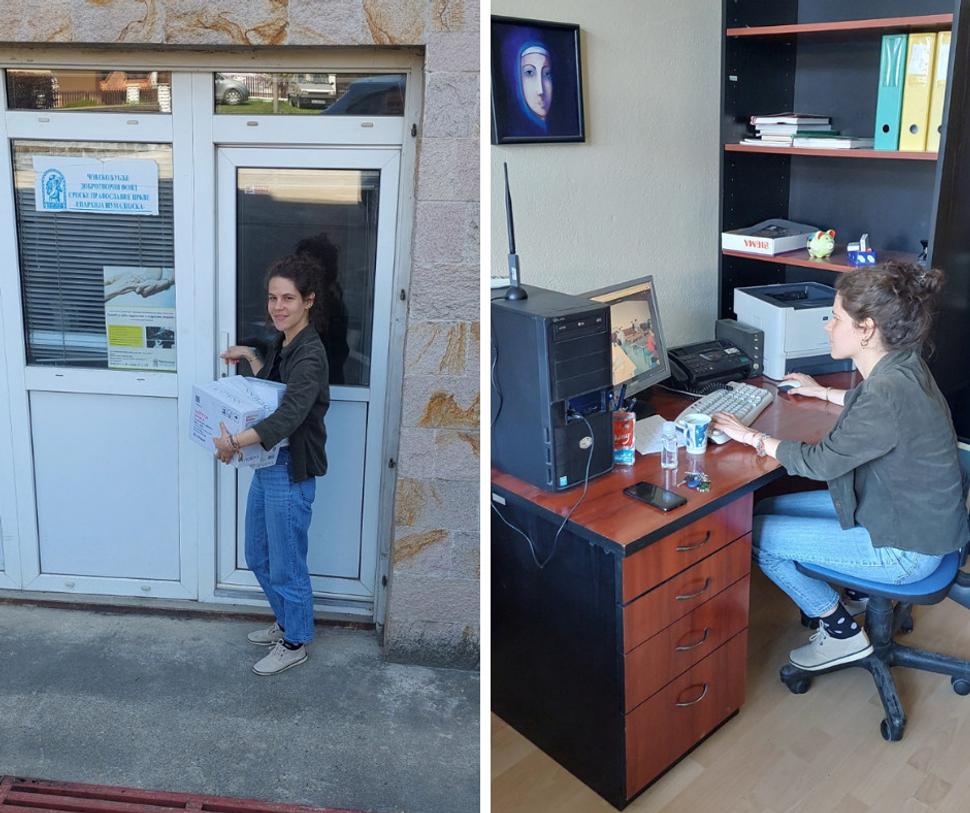
You can read about the history of homelessness in Serbia and why it is so easy to end up on the street from one day to the next in the blog of our SlovakAid volunteer Tamara, who has been working for the organization for more than half a year. Chovekoljublje in Kragujevac.
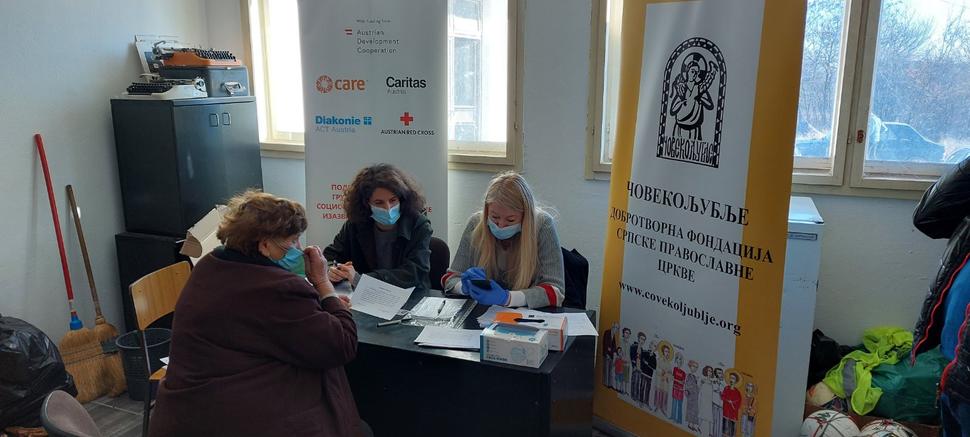
Tamara: The main focus of my volunteer work is to help in the home for people in need and on integration projects in the surrounding villages. I have done similar work with homeless people in the Czech Republic, but it was only in Serbia that I realised how wide a spectrum of people suffer from the same problems - extreme poverty, inability to cover normal household expenses and loss of home.
In this blog, I will show you how easy it is to find yourself homeless or on the edge of extreme poverty in Serbia, and how NGOs and ordinary citizens take care of the problems that the state is supposed to solve.
Home, a profitable commodity
When we say home, most of us don't think of a specific building, land, or material things, but rather the feelings we experience in our home. Home is associated with family, memories, security, the feeling of knowing you belong and having somewhere to hide from the outside world. However, over the last few decades in Serbia, the homes of ordinary people have become commodities, inhospitable places that represent only profit for the upper, and now middle class, population. For this part of the population, the state, developers and executors, they are just places, plots of land without a past, square metres converted into euros. The more rooms, the more profit.
There are several reasons why people in Serbia end up on the streets or in extreme poverty. As in our country and in other countries of the former Eastern bloc, there was privatisation, which is still going on today. Another problem is unemployment, low-income jobs, poverty, pensioners living alone, but also foreclosures and the lack of housing support in legislation. All this deprives people of the roof over their heads, as well as their dignity. People often live in illegal settlements, in hostels, on the streets or on absurdly low social assistance.
Destructive state social policy
Homelessness in Serbia is thus a long-term and complex problem, which can be traced back to the 1992 Housing Law, which kick-started massive privatisation and discouraged the government from providing adequate public housing. Open market housing advocates in the 1990s insisted that a new tenure structure would help solve housing problems. But the opposite was true. The new strategy led to a deepening of segregation, a worsening of the housing situation, and all this was accompanied by the destruction of the welfare state, an increase in unemployment and poverty. Stuck between the socialist and capitalist strategies, the workers of several companies remained in long-term occupation of work flats without being aware of the right to housing. The right to housing is guaranteed in the European Convention on Human Rights, which, although Serbia has ratified, cannot be said to have respected. Even if the right to housing is proven in court in certain cases, the right to property remains decisive.
After the break-up of Yugoslavia in the 1990s, the Republic of Serbia sheltered more than 600,000 refugees, mostly from Bosnia and Herzegovina. Today, almost 30 000 still live here, with the decline due to their integration within Serbia. Many of them have, after many years, been able to access housing, mainly thanks to the Regional Housing Programme, whose activities I will describe later. On the other hand, many refugee families are still facing possible eviction due to “illegal” housing. Residents who could not afford to buy the apartments used in the former Yugoslavia simply lost them as a result of privatisation, as they are subject to restitution and denationalisation.
Another problem is various frauds, for example in the sale of real estate. We know of cases where investors have sold the same house to several buyers or where the new flat has been taken away from the buyers because of the investor's debts. The endless court wrangling does not stop (public) bailiffs from doing their job, who are not shy about seizing the property of the victims. In fact, the 2011 law included private bailiffs in the execution procedure and the 2015 law on foreclosure added a prefix to bailiffs Public, thereby greatly expanding their powers. Over time, it became clear that there was no public interest at stake, but that the implementers were private entrepreneurs who were only interested in profit. Bailiffs, for example, served notices irregularly in trials. The debtors thus lost their right of appeal, and as a result they could lose their flat because of a debt of only a few hundred euros.
The vicious circle of housing insecurity
Serbia's economic system is not set up in favour of ordinary families. A family on an average salary can easily be threatened by unexpected expenses. Even illness and therefore incapacity for work for a few days can lead to debt, problems with loan repayment and subsequent foreclosures and evictions.
We can see that not much has changed since 1992 and that the Government continues to formulate laws to the detriment of the most vulnerable in the Housing, Building Maintenance and Social Housing Act. This 2016 law has caused the forced eviction of thousands of families from their homes. The first law led to the privatisation of almost the entire housing stock in the country, and the second facilitated evictions while dealing with various legal problems with the properties.
People living in social or refugee housing also face the fear of losing their housing. They are threatened by the obligation to pay property taxes, which since 2014 also applies to recipients of social or refugee housing. When small energy or rent arrears are added to this, it leads again to evictions, which shows the dysfunctionality and unsustainability of the established social housing system. Thousands of Roma have also been forcibly evicted from settlements, again for the sake of urban renewal. Others from the nearly 600 Roma settlements on the territory of Serbia continue to live in fear of their homes, in inhuman conditions and without access to basic services.
Almost none of this vulnerable group of people who have lost the roof over their heads have received legal aid, let alone compensation. Evictions are still a threat to indebted Serbs as part of the latest phase of the transition strategy under the privatisation of the Serbian housing stock. Virtually anyone can find themselves homeless here.
There are 5,000 people living in extreme poverty and homelessness in Belgrade, a city of two million. Other sources, however, speak of up to 15 000 people. However, despite these alarming figures, the city has only one official hostel for adults and the elderly, and it has a capacity of 100 beds. The situation has been worsened by the Covid-19 pandemic, during which the hostel was closed and clients were left on the streets. The situation in the adjacent settlements was also neglected during this period, with people losing their jobs in large numbers and no adequate response from the state and local authorities.
On the contrary, we know of many unfortunate cases where homeless people have been fined for staying out on the streets at night or even ended up in jail for failing to comply with a home lockdown. However, no one has advised them where else they should have stayed. It was a joint project between ADRA Serbia and ADRA Slovakia that responded to this situation in the early days of the pandemic, you can read more about it here.
So we can say that the pandemic has opened up a lot of questions not only about the problem of homelessness itself, but also about how important it is to have decent housing, warmth in the house and enough space, whether for possible quarantine or spending most of the day at home due to lockdown. However, the conditions experienced by a large proportion of households in Serbia could hardly be considered decent and in many cases are more likely to contribute to the persistence or development of other diseases.
The global phenomenon of housing unaffordability
Both housing prices and rents in cities are disproportionately high to the average wage. This leads to several generations living together in inadequate conditions in the same apartment. These high prices are certainly not only a problem in Serbia, but are also encountered on our territory and elsewhere in the world. And perhaps many people feel, wherever they are, that they do not need to be concerned about people living on the streets and that they are not directly contributing to this system when they are renting their second home to pay off their mortgage or just to provide financial stability for their children. But they are wrong. They are contributing to the fact that the market price of flats and rentals is rising markedly and becoming unaffordable for an ever wider section of the population.
Moving to adjacent settlements or villages may be an option for these families. However, there are hardly any job opportunities here, which again leads to problems in paying for the expenses related to running the household and especially heating during the winter months. In our centre for people in need, we have had several cases of people who have come to us just to wait out the winter and therefore stay for a few months because they had no money for firewood.
Another problem in these hungry valleys, which can also be found in Slovakia, is the lack of infrastructure. The nearest shop, doctor or school is often tens of kilometres away, and it is only possible to get to them on unmaintained roads by car, which many households do not have. In many cases, it is the last generation of lonely pensioners who live here, with no family members to lend a helping hand. Within our organisation, we also have many integration projects aimed at helping these vulnerable groups. We distribute food parcels in the villages, come with a team of doctors or provide outreach social assistance. These villages, which are only a few kilometres away from the city of Kragujevac, represent a different world. You will hardly find bus stops, children running around, shops or schools. Instead, you will find beautiful nature, poverty and some pensioners.
Where the state has failed, the non-profit sector steps in
On the brighter side, there are a number of organisations and initiatives in Serbia that are helping with this issue. These include, for example, the aforementioned Regional Housing Programme (RHP), which fights homelessness in Serbia by providing housing for refugees. The programme is a joint initiative of the States of Bosnia and Herzegovina, Croatia, Montenegro and Serbia, with the aim of contributing to addressing the long-standing situation of displacement of the most vulnerable refugees following the 1991-1995 conflicts. To date, RHP has accommodated more than 6,000 of the most vulnerable refugee families on the territory of Serbia.
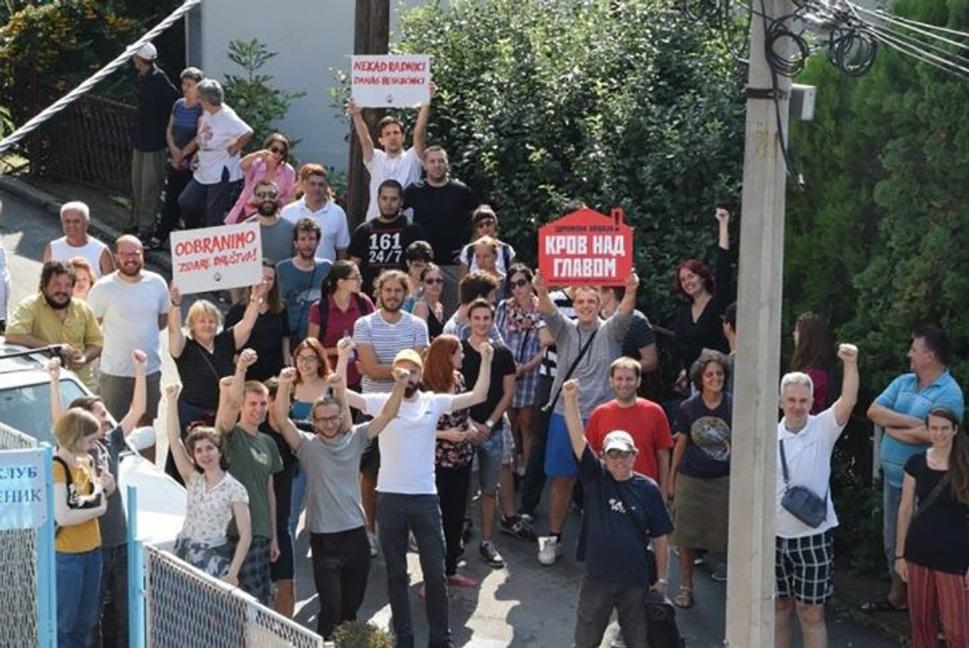
Another organization, United Action Krov nad Glavom, which has offices in Belgrade, Novi Sad and Subotica, is fighting against public bailiffs in forcibly evicting indebted residents. The organisation focuses on helping those who have either been victims of fraud in buying or proving ownership of property, but also when it comes to the only home of people facing eviction. These are the two main criteria on which they act and in their five years of active assistance and activism, they have already prevented hundreds of evictions, keeping a roof over many families' heads.
At the beginning of the pandemic they came together with the portal Nova.rs with an activist campaign called Niko without a home (Homeless Nobody), where they used a series of texts, video reports and later protests to highlight the extent of systemic injustices and their consequences against people who were left homeless. In this way, people joined forces to demonstrate injustice together, with direct action in ongoing foreclosures proving to be the most effective form. The activists protect the house with their bodies, thus delaying the eviction of the family. These activities, in which several arrests have been made, are attracting increasing public attention. The number of citizens who are actively using their bodies to fight against evictions is growing.
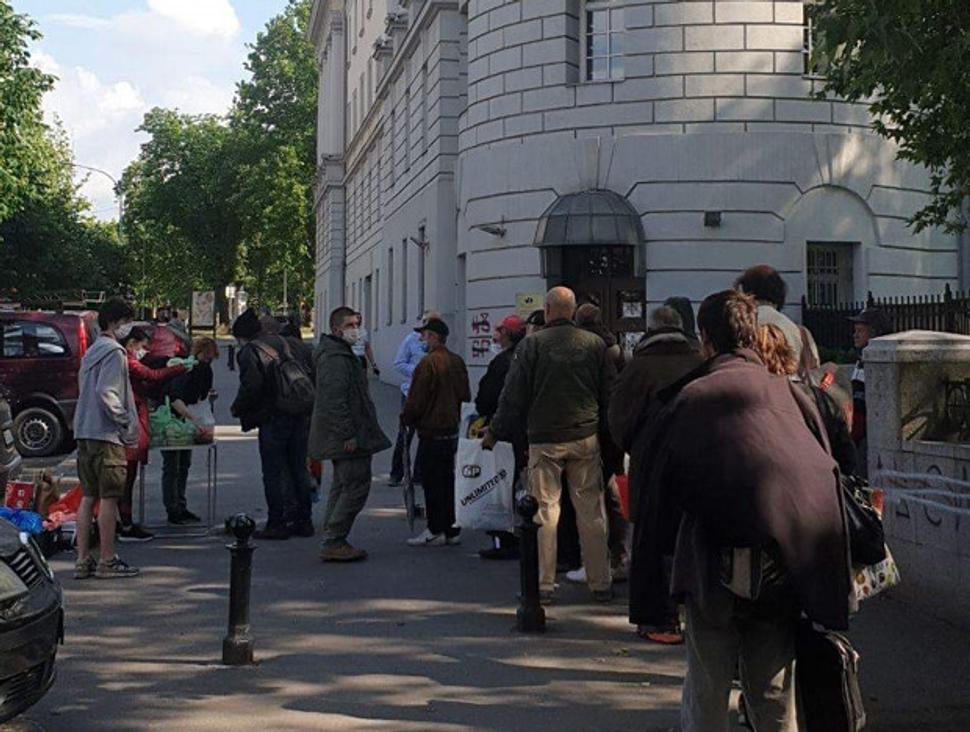
Food is provided by a self-organised collective Solidarity Kitchen, which cooks and distributes food to people in need in Belgrade and Novi Sad, using its own funds or donations from the public and on a voluntary basis. The collective was born out of the need for solidarity and mutual aid to respond to the pervasive problems of poverty, hunger and injustice, which have been exacerbated by the advent of the pandemic. Members and activists participate in all aid-related activities, with the aim of alleviating the consequences of state and societal negligence towards extremely vulnerable groups. The collective, whose motto is: “niko ne sme da ostane gladan” (no one must go hungry), does not cooperate with any political parties or their affiliated organisations.
Ministry of Space is another initiative that was originally created through actions to activate abandoned spaces. Currently, it deals not only with the issue of efficient use of abandoned buildings, but also with participatory planning in the development of the city and, last but not least, with increasing the affordability of housing. The organisation fights for a more radical paradigm shift in housing in order to accept the right to housing as a fundamental starting point for future housing policies.
Then there is ADRA Serbia, with its Drumodom, a specialised bus to provide basic sanitation.
You can read more about how ADRA is helping on the streets of Belgrade in blog ADRA Slovakia and blog Volunteer Dominique.
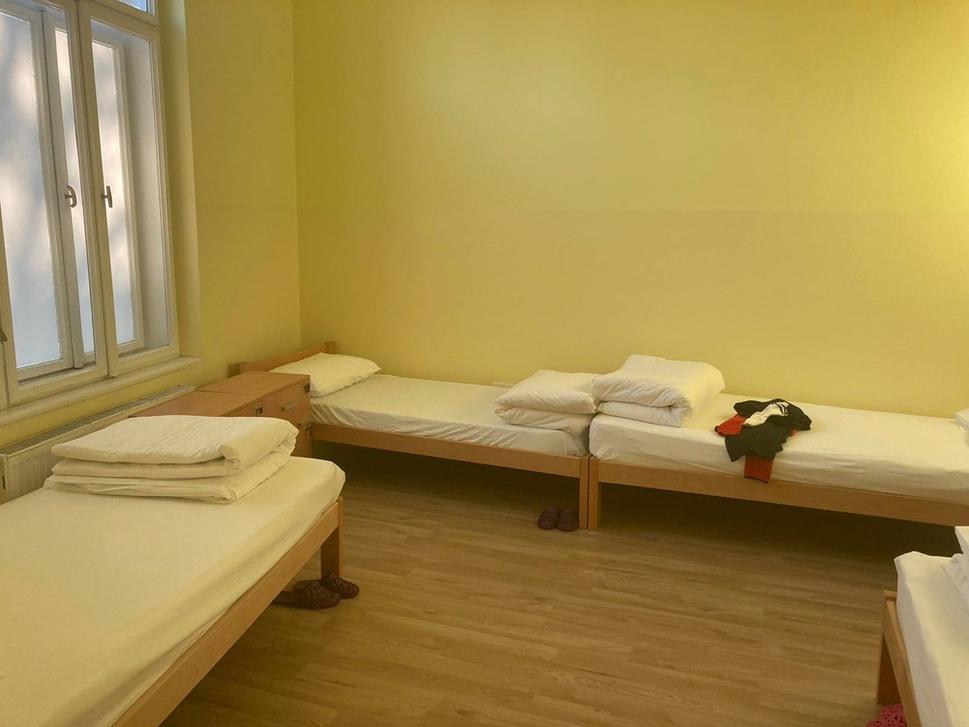
As for the organization I work for, Philanthropy (Philanthropy), in the centre for people in need or homeless, we try to integrate the residents back into the society, help with securing social benefits, visiting doctors, offices, finding a job or adequate accommodation. We provide accommodation, food and last but not least help from social workers. We also have integration projects in the surrounding villages, the activities of which I have already outlined in part, and we also provide home care for pensioners who live alone. More about our work in In the video.
In addition to the aforementioned non-profit organisations and initiatives, there is also Housing Center, an organisation working to improve the living conditions of disadvantaged groups and promote their social integration. Further A11 - Initiative for social and economic law promoting the rights of individuals from vulnerable, marginalised and discriminated groups, with a focus on economic and social law. When you build a castle in turn was created as a reaction to the urban development in Belgrade characterised by corrupt privatisation of public resources and clientelistic behaviour of the government.
Given the Serbian government's lack of efforts to provide its residents with clean and safe public housing, to build social housing, or to respect the right to housing, these non-profit organizations, collectives, and grassroots volunteers bring tremendous support and hope to the many people affected by homelessness in Serbia.
Let us all be more in solidarity and sensitive to the injustices that are happening around us.
Author: Tamara Jankechová, SlovakAid volunteer in Serbia
The views expressed in this article belong to the author and do not necessarily reflect the position of ADRA Slovakia, Philantropa (Čovekoljublje) or SlovakAid.

 EN
EN  SK
SK