




Our development volunteer Tamara sums up her year in Kragujevac, Serbia.
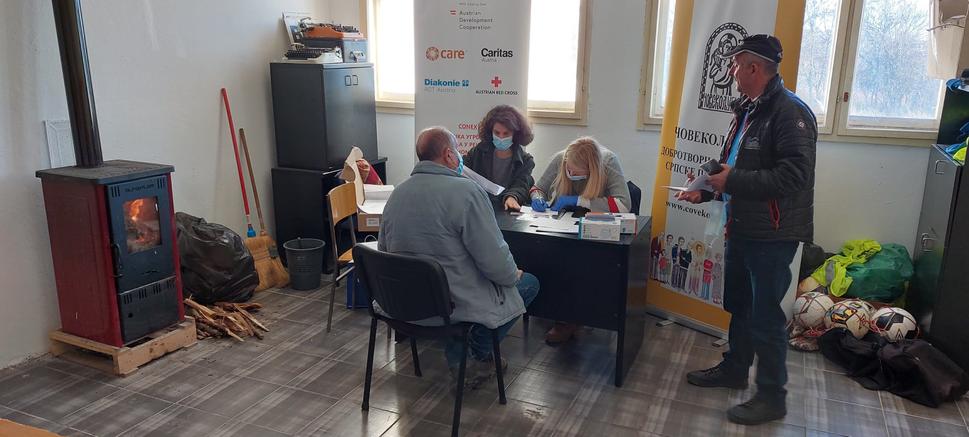
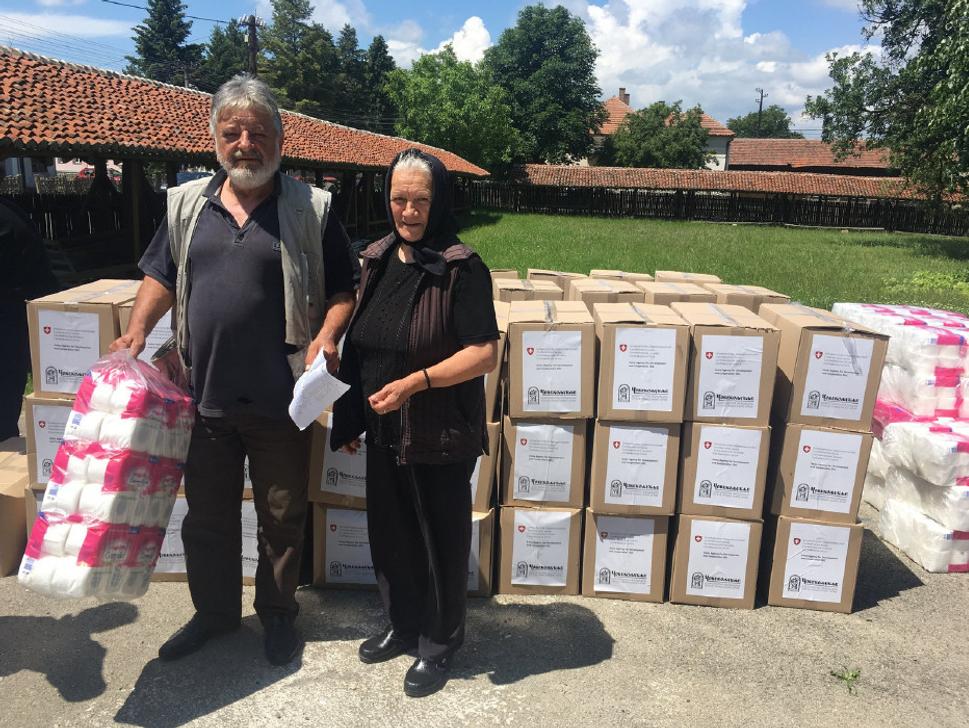
Tamara JankechA: In Kragujevac I worked as a SlovakAid volunteer in the organisation Chovekoljublje, at a hostel for people in need and at integration projects in the surrounding villages.
Thanks to this, I had the opportunity to get to know other, less explored parts of Serbia, and talk to people living outside the urban bubble. I visited Serbia a couple of times before I decided to spend a year of my life there. I knew what to expect, and what I wouldn't miss here. Or so I thought...
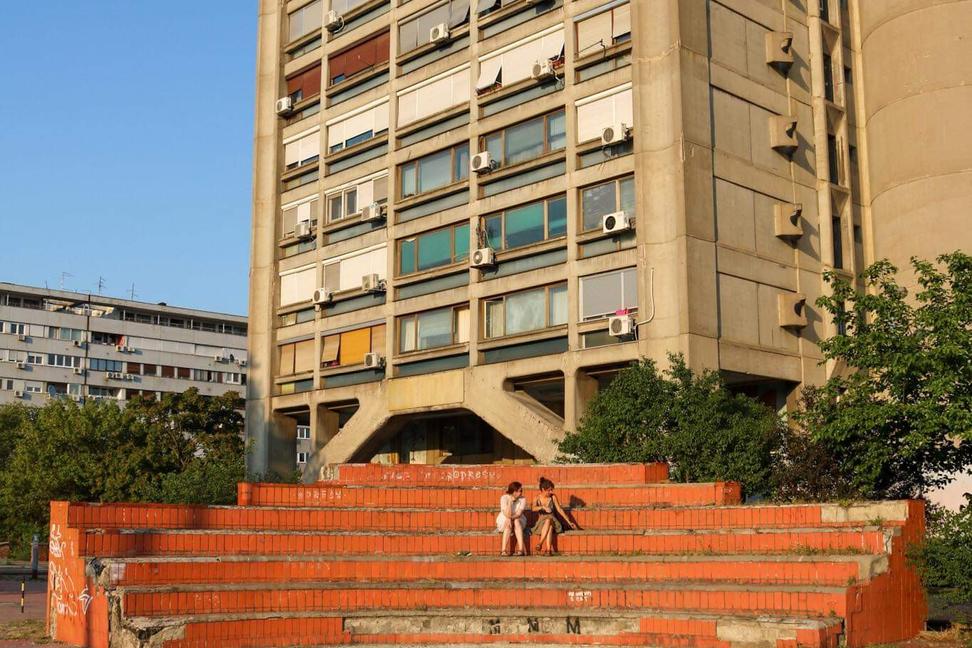
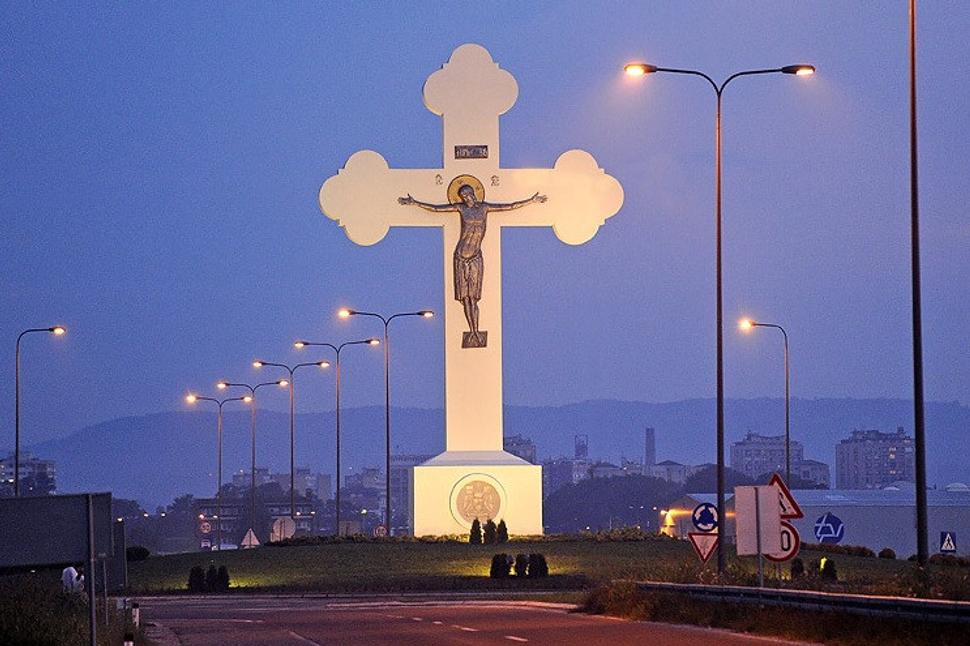
I remember the first day I arrived in Kragujevac. The day was rainy, but still pleasantly warm. I was struck by the huge cross in the middle of the roundabout and the even bigger statue of the Fiat logo a few meters away. Faith and work, religion and industry... an interesting welcome. A colleague from Belgrade tells me while driving that Kragujevac is a particularly ugly town. I swallow my saliva and tell myself that someone could have told me that before I decided to spend a year of my life here. The people of Kragujevac would strongly disagree, however, and it only took spending a few days here for me to stop agreeing as well. Kragujevac was once the capital of Serbia, and to this day its residents proudly say that „the head may be in Belgrade, but the heart is in Kragujevac”. In Belgrade they laugh at this and I find it endearing. The people of Kragujevac are proud of the first Serbian gymnasium, the first theatre, the first newspaper, Fiat (former Zastava) or the still-cheap kafanas that are on their deathbed in Belgrade.
A year since my arrival, I'm sitting in one of those smoky cafes, drinking coffee, waiting for a prebranac and thinking, among other things, that I'm probably the first person to come here with a computer. I also take out a cigarette to at least fight off the uncomprehending, but smiling stares. Kafanas are one of the things I'll miss about Kragujevac - cheap food, coffee with ratluk, cigarette smoke, live music on weekends, and always a bit of theatricality. It doesn't take long for the gentleman sitting at the next table to speak to me. He responds to the information that I am from Slovakia with an acknowledgement of the peaceful division of Czechoslovakia. „We never knew that, to shake hands and part as brothers,” he says, a map of the former Yugoslavia hanging above him. The Serbs are smiling, having fun, but behind their smiles there is also a subtle bitterness, I don't know whether from the past or the present. Maybe from both. We all know their scars from the past, but what troubles them in the present?
Protests as an image of the country
I was surprised by the number of demonstrations here, and I think that if we want to understand what is happening in Serbia at the moment, what is troubling the population, and what the problems are in the country, all we have to do is look at the reasons for the discontented people in the streets. I myself did not always agree with them, especially when it came to support for Russian aggression against Ukraine, protests against the LGBTI+ community or against vaccinations. Unfortunately, these protests are also a reflection of society. Most of the protests, however, were directed at the incompetence of the government, and at Aleksandar Vucic.
The environmental protests, mainly related to the cancellation of the state's commitments to Rio Tinto, were some of the first that I registered, and they were happening all over the country. Thousands of demonstrators blocked major roads in several cities. The reason was the planned construction of a lithium mine near the town of Loznica. Activists claimed that this construction would cause irreparable damage to the landscape and contaminate the region's water supply. The Serbian authorities were taken aback by the scale of the protests and the overwhelming support, which went beyond the usual group of opposition activists. Construction of the mine was halted mainly because of fears of losing votes in elections held a few months after the protests began, in April this year.
The protests in Kragujevac were related to the Fiat plant, which is owned by the multinational company Stelantis. The protesters were asking the government to protect them from the company's decision to declare 1,541 of its 2016 employees as surplus labour, with the option to leave to work in other company factories in Europe (e.g. also in Slovakia), or to terminate their employment with severance pay. The protesters failed to win more acceptable terms, and I am amazed that the giant Fiat logo still stands on the roundabout and greets people as they arrive in Kragujevac.
I described the protests directly related to the housing crisis, the lack of social housing and illegal evictions of families from their homes in my last blog, which you can read here.
Protests are seen as a sign of democracy, an expression of political and social participation through which people can express their discontent and influence public opinion or government policy. Democracy in Serbia is experiencing difficult times, and demonstrations may be the only way left to open a dialogue with the government.
Is Serbia a democratic country?
After the fall of the Berlin Wall, it was assumed that liberal democracy would become the generally accepted standard of the new Europe. But Serbia, under the authoritarian rule of Slobodan Milosevic in the 1990s, missed out on a decade of euphoria about democratisation and went its own way. Milosevic's government fell in 2000, Serbia formally applied for EU membership in 2009 and was granted candidate status by the European Council in 2013. During the first decade of the 21st century, Serbia's vision of the European Union as a place with a prosperous future prevailed. However, despite the (small) efforts that have been made, this no longer seems to be the case today, led by President Aleksandar Vucic, the support of Russia and a polarised society. Contrary to the expectations of establishing a liberal democracy according to Western models, Serbia's European path has shifted towards an authoritarian system. We see something similar in our Hungarian neighbours. Although there is party pluralism and other institutions typical of liberal democracies, the population is aware that one head decides everything.
Some of the soft authoritarian tools used by the Serbian president are the use of democratic elections as a means of political legitimation, avoiding the use of direct and strong repression, delegating violence to non-state actors, and encouraging polarisation of the electorate.
Showing the whole world that Serbia wants to represent a democratic and developed country that has its place in the West was possible, among other occasions, at the beginning of the Russian occupation of Ukraine. However, they have only shown that Russia is an increasingly convenient ally for them to count on in the future.
In my subjective observation, the Serbs are confused about who to trust, and they remember, among other things, the events that took place in 1999. They feel that they have been wronged and that the West has turned its back on them and has not helped them. The people here support each other in their long-standing grievances and misfortunes, but also in their nationalism, and this solidarity therefore does not, for the most part, leave the borders of Serbia. I hope that the growing Russian influence, and this indomitable pride of the Serbian people, will not lead to another conflict with Kosovo, which is becoming an increasingly hot topic here.
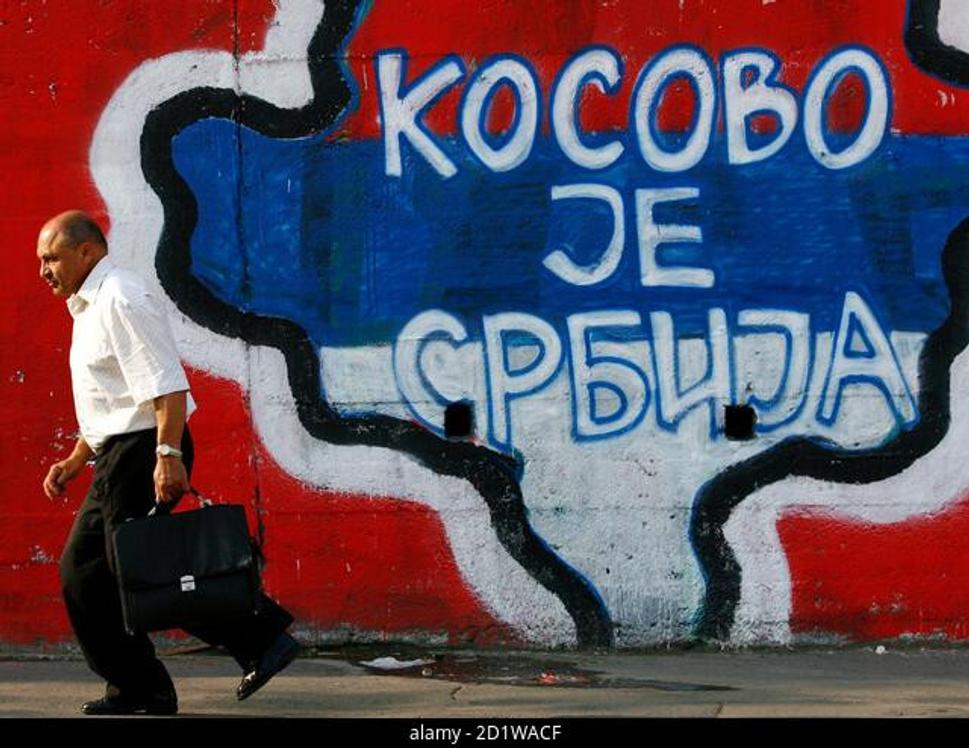
After this brief summary, it must be stated that Serbia, like several countries in Eastern Europe, does not meet the criteria of a democratic state. This is also the result of a survey Freedom House For the third year in a row, the country has failed to meet the standards that would classify it as a democratic country, and so there is a so-called hybrid regime of governance, combining democratic and authoritarian elements. The non-recognition of Kosovo's independence, the problems with the politicisation of public administration, the lack of fair elections, the reform of the judiciary and the almost non-existent freedom of expression are just some of the features of this hybrid regime, which represents an obstacle to Serbia's path towards Western politics and the European Union. The moodiness of the population and the difficult living conditions only play into the hands of the government's representatives to manipulate the masses and use them on their path towards totalitarianism.
At the beginning of my stay, I enjoyed debating with people and raising these topics about Serbia's accession to the European Union, their relationship to Kosovo, their country's past, or their opinion of the president. And honestly, maybe I was sort of pigeonholing people based on how close they were to my liberal views. I listened to a lot of stories from different people - young, old, educated, those living on the poverty line or on the streets. Our views didn't always meet, we each had different experiences and information that we believed to be true. What I could always expect, however, was respect.
I no longer start these debates myself, not because I have found some universal truth or lack of interest, but because I already know that answering these questions will not tell me anything about the person I am communicating with. I haven't walked in their shoes and experienced these situations, so I can't pass judgement on them.
Nor does it mean that I turn a blind eye to the injustices that have happened here many times, and certainly not to the events that have taken place here in the past. And yes, there are conspirators, fascists, people with bad intentions, public supporters of the war in Ukraine, as there are everywhere, who might not show the same amount of respect when discussing Serbia's past or future. However, the criticism here is primarily directed at the government. Serbia is the country with the greatest income inequality in Europe, a huge number of people live on the poverty line, there is a lack of jobs, housing, a free media and therefore a well-informed population, a lack of infrastructure outside the cities, a lack of democracy. Vučić, as an opponent of socialism, promised a break with the policies of his predecessors. He wanted to restore order and help the poorer sections of the population. However, by his unwillingness to invest in social security systems such as education and health care, or by redistributing resources according to the interests of large corporations, he is only continuing to build “socialism for the rich”. And it is in this type of policy, I think, that the importance of the work that the non-profit sector is doing here has become apparent. They represent the obligations of a state that distances itself from helping the most vulnerable in favour of the elites.
The Serbs are a people who have been through a lot, whether in their own country or in the surrounding area. Since the break-up of Yugoslavia alone, there have been a number of conflicts in the Balkans, whether in Bosnia, NATO air raids on Serbia, or, more recently, the escalating tensions on the Kosovo-Serbian border. Wars, conflicts and the constant shedding of the label of the uncivilised nature of the Balkans have left people with grievances and mistrust in institutions and partnerships that we consider to be the pinnacle of democracy and progress. And these scars are passed on from generation to generation. Their bipolarity, in the sense of whether they are oriented towards Brussels or Moscow, whether they have a democratic regime or a totalitarian regime, whether Kosovo is part of them or not, is a little bit in me and probably in all of us. We want Serbia to move forward, to be a developed country, but at the same time we still (perhaps secretly) admire the idea of Serbia as part of the wild Balkans, exactly as it is at the moment, and we do not want it to change.
After a year in Serbia, I know that, despite everything, there is some peace and solidarity among the people in all this turmoil. For they are united by a strong common past. The Serbs are not only a proud, but also an unusually friendly and hospitable people who certainly know how to have fun. I already know that Belgrade is an even more charming city than I remembered, but there are reasons why it is still only at the level of a European city and not a European Union city. And that Guča in recent years, rather than being for locals (as it was in the past), has been organized for curious tourists who come to enjoy a few days of laid-back fun in the Serbian countryside and experience the real Balkans. Events have not changed, you will still experience situations here that you won't see in other countries. When you start to adapt to local life, you will suddenly find our, Slovak, stubbornness funny.
I would like to thank ADRA Slovakia, Official Development Assistance Slovakia, SlovakAid, as well as the host organization Čovekoljublje, and all my colleagues for the year I spent as a development volunteer in Serbia. Last but not least, thank you to all the clients I met at our hostel for people in need, for all the stimulating debates, games of chess played and for becoming my family for a year. I think there is something infectious in the Serbian mentality and in time you too will begin to feel proud that you have, if only for a moment, but still, become a part of their story.


 EN
EN  SK
SK