




Why did you volunteer in the Philippines?
I was interested in development aid - in particular its ethical aspect, the way money is redistributed in projects, sustainability and the weight of the declared needs by the beneficiaries themselves. From my previous volunteering experiences, I learned a lot to take away from the time I spent for others without financial reward, and to try to make the most of it for myself. I think that's kind of the biggest motivation for people who get active in different associations, movements... But I wasn't motivated to go to the Philippines to help, but rather to learn more about the ethics of development organizations in those countries.
You came back a few days ago. Don't you regret signing up?
I don't regret it at all. I'm very grateful for the experience, because I was able to get the most out of the job because of my interest that I had there.
What were your impressions?
First impressions of the Philippines were, of course, horror and dismay. I think that the „taking off the glasses“ way of looking at the workings of the world, which I had been preparing for for a long time before I left, I understood only on the spot. A lot of things are different there, and even if first impressions are that it's bad, or at least worse than here, it doesn't have to be that way right away. I say to myself, the traffic jams here are terrible! To travel even the 40 km it took us to get to the capital Manila sometimes took 3-4 hours, horrible!!!What I wished was that the air there was at least as clean as the peak hours at the Trnava Toll. On the other hand - comparing Bratislava and Manila, which are comparable in size, the population in our Bratislava is 600-700 thousand, whereas in Manila it is around 25 million. From that point of view, I thought it was a miracle that we were moving at all. So from my dismay at the traffic, the ossification of the system, the corruption, the pollution, the poverty... I said to myself that with such a huge amount of people with such a difficult history as the Philippines, it's no wonder. The dismay comes because I had something to compare it to, if one has no other knowledge, one doesn't see it all that negatively - not even the typhoons and the destroyed homes, the poverty - especially the kids in those evacuation camps, when they don't have school and they're all there together, they're having a lot of fun, sometimes thanks to different organizations.
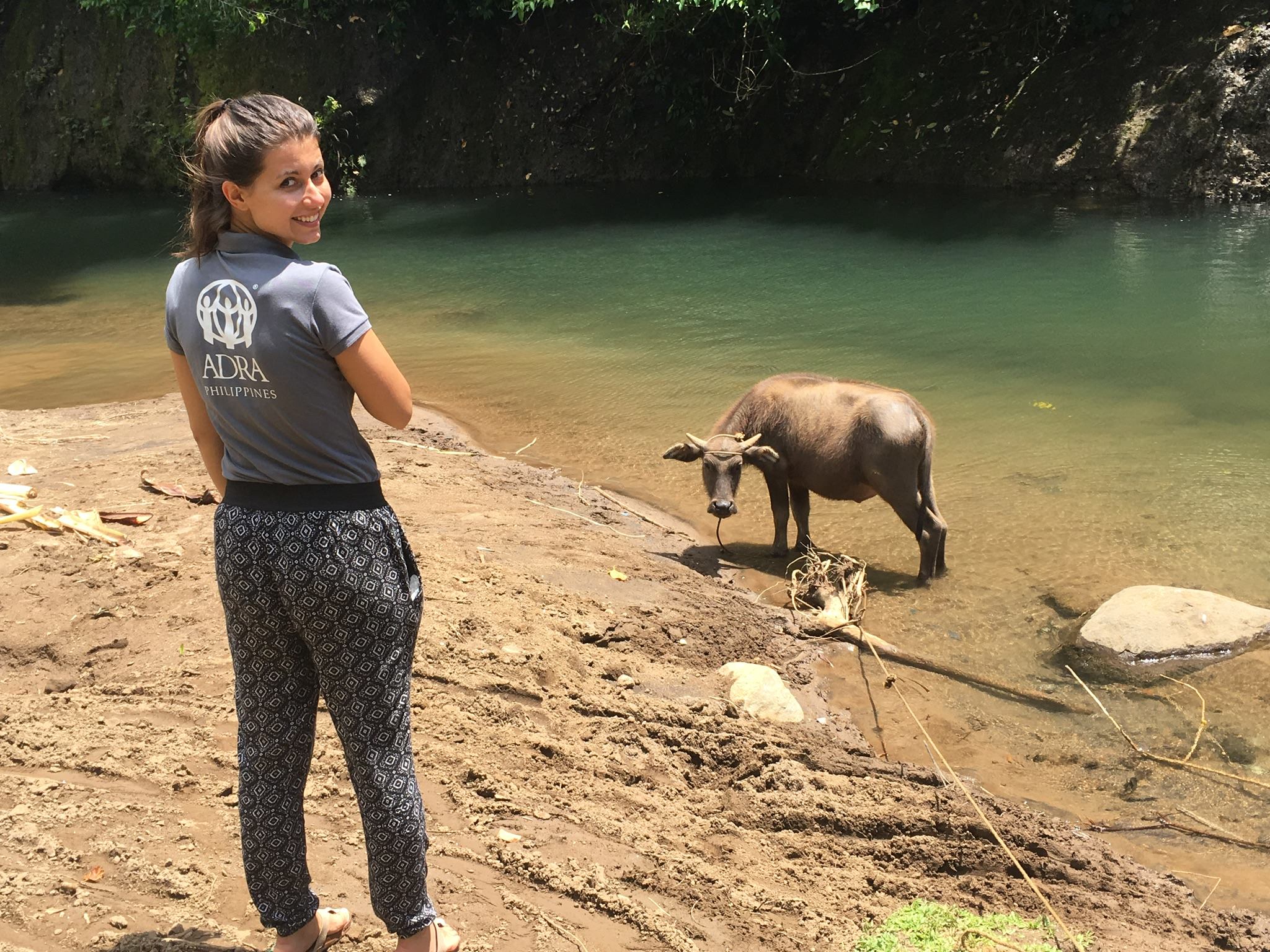
You helped in ADRA Philippines - what did this help consist of? In your opinion, does development aid make a difference?
I worked as a Planning and Research Assistant - my assistance consisted of actively seeking international donors for appeals that were strategically aligned with the direction of the organisation. Then analysing needs, communicating with stakeholders and from the data collected trying to set a goal and activities to get to the goal. Simply put, plus other administrative duties.
In a country like the Philippines, where corruption is found at every level and permeates the entire history of the country, there are a large number of organisations and huge millions of money pouring through them. Unfortunately, here, too, it is possible to see how some people can get rich out of charity. I have been very lucky with my organisation. I worked with people who were highly organised and efficient. They faced many obstacles in doing their work that hindered them from fulfilling their mission, but they worked soulfully in spite of it. Thus, what I find most distressing is the unethical and unsustainable nature of the projects. However, where the word of beneficiaries is viewed with sensitivity and where their involvement is active, there is a high likelihood of sustainability as well. But even in the Philippines, I heard of how beneficiaries were even more frustrated with the organisation after the project ended than before it began, precisely because they had been given the entire service by the organisation and the locals were unable to continue the processes. And I think that's a huge problem. And I blame that mostly on those insensitive organizations.
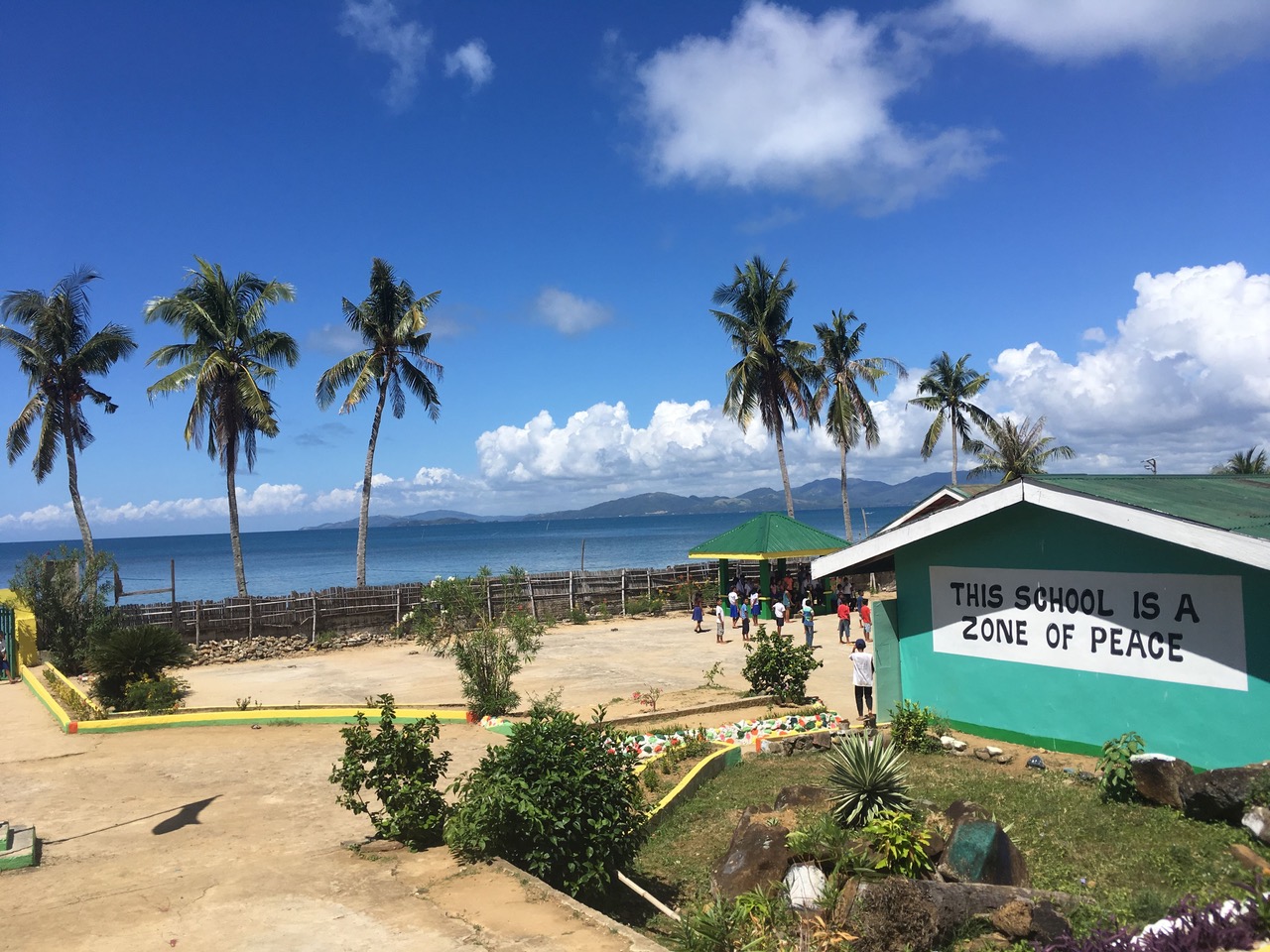
What are the people in the Philippines like? Food? Anything else that caught your eye? What about nature, did you manage to travel around?
I don't like to generalize, but I was lucky to meet people in the Philippines exactly as they are stereotypically described - kind, selfless, hospitable and very respectful. To them, family is sacred and they value relationships and helping others above all else. They are resilient and patient. Despite the high level of poverty, I have met mostly very joyful people. But on the other hand, it's hard to expect sincerity from them, because to be critical of another is to put them in an awkward situation, which they want to avoid in every way possible, because they are afraid of jeopardizing their relationship with a particular person.
I wasn't very impressed with the food. Lots of greasy, everything sweet was sweetened and 3 times a day classic - meat and rice.
Nature, in places where there are no human dwellings, is beautiful. But the Philippines has a very poor provision and practice of waste recycling. There are no garbage bins everywhere and people throw their waste on the ground, even in caves, on beaches or in the mountains. Apart from that, the Philippines has a lot to offer in terms of truly paradisiacal nature. Its protection is very poorly provided for, which also makes me wince as I look to the future.

What did you discover, experience, learn? What surprised you? What did it give you?
I was surprised daily by many things, especially the ease with which they lived, the dedication to work, the loyalty and strength of family ties. Examples like these will be etched into a person who has the opportunity to make friendships with such people for a long time.
Here at home, I've already had several opportunities to fret about train delays, the little things that can throw us off, or the unwillingness to help each other. But when I remember life and the humility and willingness to share even the little things in the Philippines, I remember what life should really be about.
Oh, and the aforementioned traffic - I sometimes wondered how it was possible that these people don't have thousands of crashes every day - after all, nobody follows any rules here - but I was later told that there aren't that many rules. Not even a speed limit on most Philippine roads. But people are so highly adaptable that they know how to navigate it. I didn't experience any nervousness behind the wheel. I used to be the most annoyed on those buses because even an hour's reserve wasn't enough for me with the short distance.
We are sending 3 more volunteers into the world. What would you say to them?
Keep an open mind, don't judge and ask a lot of questions. Spend time with the children and just be kindly critical.


What are your plans now?
I managed to find a job in Bratislava in HR. I'm hanging up my nails on the non-profit sector for now from a professional point of view.
 EN
EN  SK
SK