




Dominique, our volunteer sent to Albania for 12 months, brings us an interview with a young participant of the activation project of the city of Tirana.
This view of the world also motivated me to volunteer and work with marginalized groups. Such work is not easy. Compassion beats inside a person with anger, despair and big plans. Over time, he realizes that everything is working against him, sometimes unwittingly even the very people he is helping. As individuals, we can't do that much. Even as volunteers sent for only a year or six months, we don't immediately see the change we are trying to make. We cannot blame the slow pace of progress on the people we support. After all, we all grew up in different environments and have been in different situations along the journey of life that have shaped us into the people we are now. Therefore, we cannot expect someone who has lived a vastly different life, often in poverty, to have the same reactions and mindset as us.
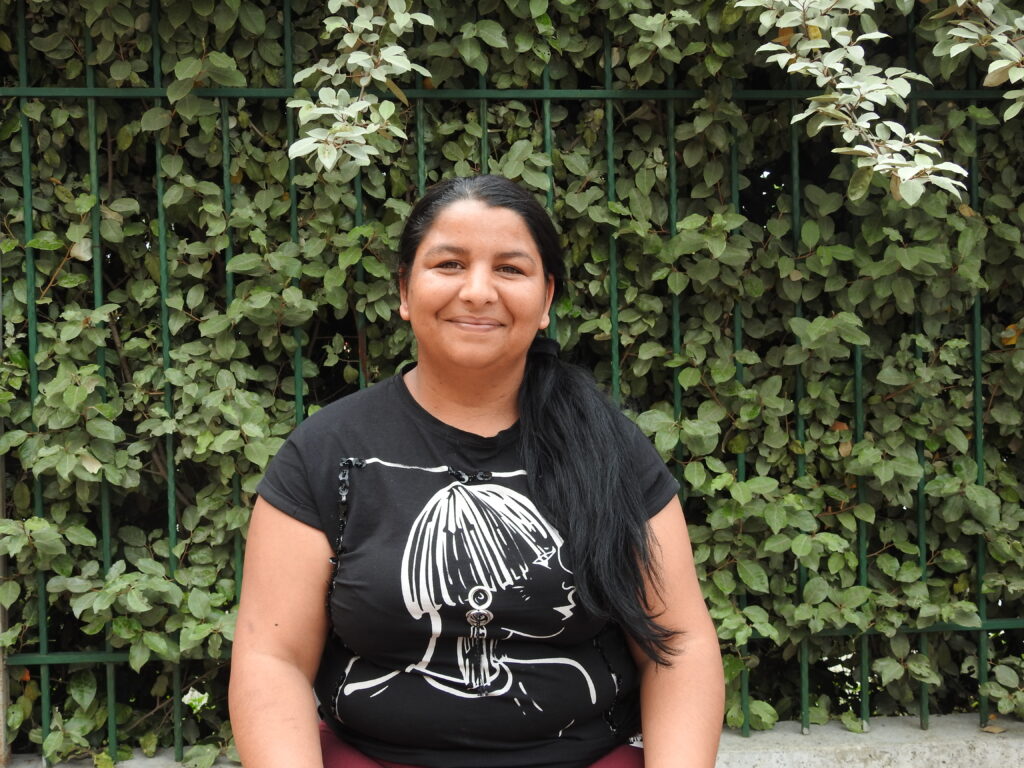
The life stories of our clients and beneficiaries are often harrowing and their decisions are incomprehensible to people who have lived in comfort and abundance. Let us now try to put aside our prejudices and ideas about the right way to live for a moment and immerse ourselves in the life story of Sania Duka, a 26-year-old member of the Roma community living in Tirana.
At her young age, Saniya is a loving mother of four rambunctious children aged 11, 7, 5, 3 and since her divorce from her husband she is also the head of the family. Two of her young children have medical conditions that make it difficult for her to find flexible enough work. They live in a small apartment on the outskirts of Tirana, which they are only able to afford thanks to a rent bonus from the municipality.
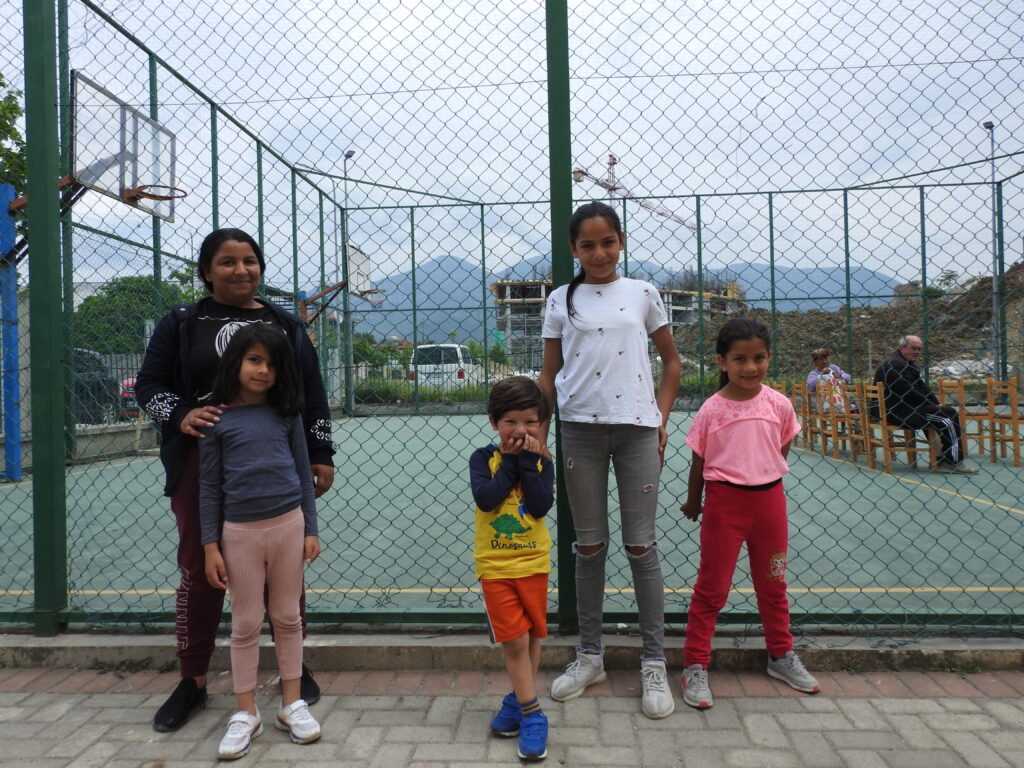
Sanija is involved in an employment support project implemented by ADRA Albania in cooperation with the Municipality of Tirana. She worked part-time as a cleaner at the Gonxhe Bojaxhi (xh read as j) community centre. As there were various activities with children during the day at the community centre, Saniya had her children taken care of and was always around in case anything happened. After the project, Saniya will have to find a new job on her own. However, thanks to her participation in the project she has increased her self-confidence, her opportunities and her outlook on her situation have changed. I believe that Sanija and her family will only get better.
Interview with Sania
Can you introduce yourself?
My name is Sanija Duka, I am 26 years old.
Could you tell us something about your childhood?
I was born and grew up in Tirana. There were five of us in the household.
What conditions did you live in?
Our living conditions were very bad. Our father was the only one working, he took care of us and provided us with school supplies. He worked on the construction site and tried his best to provide us with an education. However, with only one person working, you can't support the whole family.
Can you tell us more about your education? How many grades did you complete?
I went to school through sixth grade. However, circumstances did not allow me to continue my studies. I had no other choice, at that time my situation was complicated.
Why did you stop your studies?
I was 14 years old, I fell in love with a boy and we got married. We ran away together, but my parents knew which one was beating so they didn't look for me.* At that time I also got pregnant with my first daughter. My husband is from Elbasan, where we fled to, but his family had no place to live. We lived with strangers all the time and our situation was very unstable. When my daughter was five months old, I had to return to my parents for a while. I couldn't live like that anymore and the whole situation had a negative impact on my daughter's health.. she was malnourished, very malnourished. I couldn't breastfeed my little one, so my father bought milk and rice flour for her, which was very good for her. Over time, her condition improved.
*Sanja describes their escape as consensual kidnapping - in some parts of the country they still practice a tradition where men abduct young women and take them as wives under duress. For this reason, many girls drop out of school early to avoid being abducted while commuting to school. Abductions are also consensual; in cases where the girl's parents would not agree to the marriage, the young man will abduct his companion, but it is their joint plan.
Let's go back to school. Do you think if you hadn't gotten pregnant, you would have continued your studies?
Yeah. After I got married I often regretted not finishing my studies. I wanted to go to school like other children. Education moves us forward.
What were your peers' attitudes to education? Did they care about finishing school?
As to whom. Some wanted to, some didn't. A few of my friends finished their first year of high school, but I couldn't. I was so sorry, I cried a lot of times because of it. My friends tried to convince me to start school again, but with a little baby, it wasn't possible for me. All my friends who left school now regret it, as do I.
Tell us about your partner. Did he finish school?
My husband also graduated in the sixth grade.
When did you get married?
I got married when I was 14 and my husband was 16 at the time.
You were both children then. Can you tell us more about your first pregnancy, how you took it then?
Very childish, as we were children then. I didn't know what it would all entail. When I got pregnant, I didn't know what it meant to be a wife or a mom. At first I was shocked, after all, the baby was going to have a baby. I couldn't even change her, but my family supported me. They tried to help me as much as they could.
How has your life changed after giving birth?
We lived in Elbasan, without a roof over our heads. Eventually I became a mother of three and then four children. This period was very bad, I was experiencing a lot of stress and anxiety and I was under a lot of pressure, which made me an aggressive person. Everything changed when my mother convinced me to return to Tirana permanently. She advised me to put my children in kindergarten, which helped us all a lot. Since I didn't do much at school, I don't speak Albanian well, I only know Romani, whereas my children now speak Albanian perfectly.
Can you tell us about your work experience?
I used to work for a cleaning service, cleaning houses a couple of hours a week. That's all.
What job are you doing now?
I am currently working as a cleaner in a community centre. This opportunity was facilitated by ADR Albania, through a project funded by the Labour Office in Tirana. I am very grateful to them. Thanks to this program I have the opportunity to work and take care of my children at the same time. Two of my children have health problems and working at the centre allows me to take them here with me and look after them from time to time. No one usually employs a mother with sick children.
What would you do differently if you could go back in time?
I would finish school, do some coursework and move on with my life. I'm not happy in my current situation. I imagine that if I had gone that way, I could have had a better life.
When you mention a course, what do you mean?
My dream was to be a hairdresser, but it wasn't possible. I did a course as a seamstress, but with two sick children I can't work full time.
Would you like to conclude by saying something about this program that you are part of?
I have to admit that at the beginning I did not want to participate in this program. But now that it is almost over, I want to cry and I hope it will continue. Thank you to ADR and the Job Centre for their support.
Below photo: Sanja and her family.
Saniya has seen a lot in her relatively short life. But the important thing is that she remains an optimist despite her worries. She is a lively and talkative woman and I am sure she has many interesting stories to share with us, but due to the language barrier I was unable to make the most of this opportunity. I had the questions pre-prepared and the recording was translated for me later, so I didn't have a chance to ask follow-up questions. Despite these shortcomings, I am sure that the story of Sania Duka, will give us all inspiration for reflection and if not, at least an insight into one man's life. A man who is part of a minority that is looked down upon in most of Eastern Europe and the Balkans. Inside we are all the same, we have dreams, fears, joys and sorrows.
In the corner of my soul I hope that this article might humanize the Roma in the eyes of some people, but perhaps that is too high an ambition. Maybe it will awaken a flame of compassion in our hearts, and maybe it will just provide a distraction over morning coffee that will blow out of our heads as quickly as it went in.
By Dominique Michele Burchel, ADRA Volunteer in Serbia
The views expressed in this article belong to the author and do not necessarily reflect the position of ADRA Slovakia.
Dominique was a volunteer in Tirana, Albania with ADRA Albania. Her year-long secondment was supported by SlovakAid as part of the official development cooperation of the Slovak Republic.

 EN
EN  SK
SK