




Exchange of best practices and cooperation on humanitarian action to achieve engagement
Behind the cryptic title „Exchange of good practices and Cooperation in Humanitarian Action to generate engagement“, our project has a clear objective, namely to prepare non-EU organisations to welcome and mentor humanitarian volunteers coming from the European Union. Here we will guide you through the two-year cycle of this project by sharing activities from our trainings, trips or milestones achieved.
We participated in a training on the European Solidarity Corps, through which we plan to send volunteers abroad
26.4.2022
We participated in a 2-day training on the deployment of humanitarian volunteers through the European Solidarity Corps programme (European Solidarity Corps). As part of the capacity building of the sending organisations, we learned more about the conditions for participation in the programme, the certification process of the organisations, how to send volunteers and the different activities that await us and our volunteers. The training was aimed at organizations that plan to send as well as receive humanitarian volunteers between 2022 - 2027. As we are one of the sending organizations, we decided to actively use this opportunity and consulted with the trainer on our proposals as well as practical details of the volunteer projects.
The training was organised by the project partner Medicus Mundi Italia. We are building the capacity of host organisations under the leadership of the Italian ASPEm thanks to the support of the European Commission under the programme EU Aid Volunteers.
What have the two years of cooperation brought? Our Serbian partners answer
20.2.2020
Welcoming foreign volunteers and preparing a safe and supportive environment for them in a foreign country is a process that we have learned a lot about over the last two years together with our three Serbian partners. But what is the impact of the EXCHANGE project on ourselves?
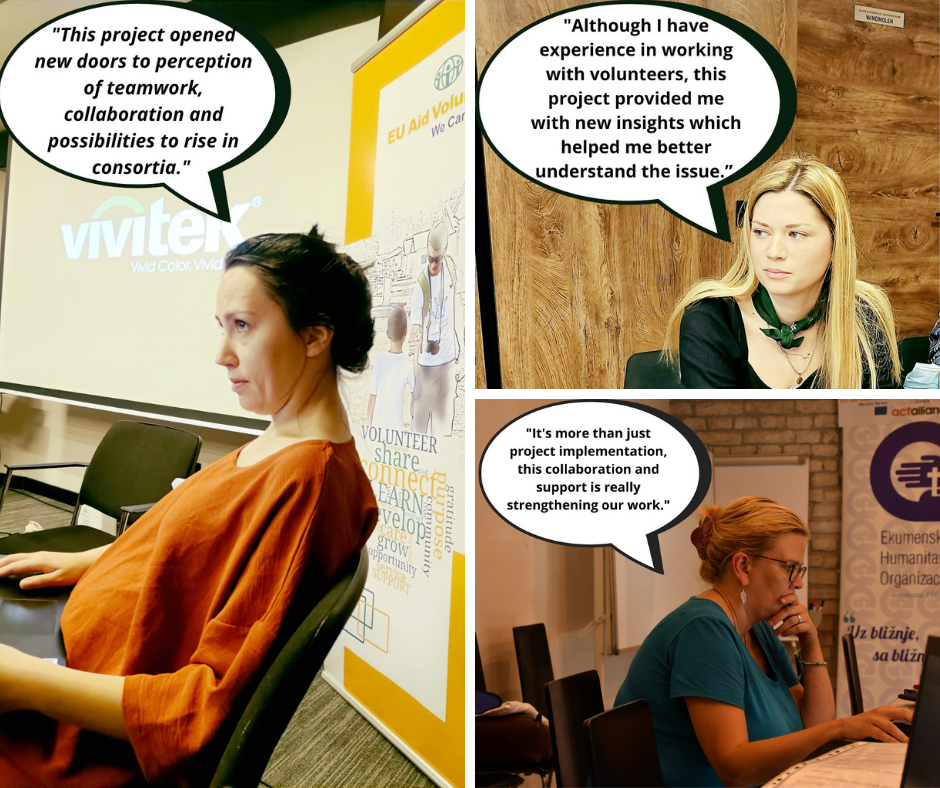
„We are delighted to have met some amazing, productive and hardworking people among our partner organisations and to have exchanged a lot of useful information on volunteer management. The project enriched us with a new perception of teamwork, collaboration and growth opportunities in consortia. It will definitely push us towards bigger projects and help us to establish successful partnerships in the future,“ says Aisha, project coordinator of the partner organization Merhamet Sandžak.
„EXCHANGE gave me the opportunity to learn something new. Although I had previous experience working with volunteers, the project gave me new perspectives and a better understanding of volunteer management, which I will definitely use in all areas of my work,“ evaluates Vedrana, Programme Coordinator of the organisation Ecumenical humanitarian organisation (EHO) from Novi Sad.
Dragana, project manager of the organisation Humanity adds: „I would say it's more than just the implementation of the project. It's more than just implementation, it's collaboration and support that really strengthens our work.“
We are building the capacity of the Serbian organisations Merhamet Sandžak, EHO and Čovekoljublje (Philanthropy) under the leadership of ASPEm Italy, thanks to the support of the European Commission under the EU Aid Volunteers.
Man changes, pandemic changes
24.04.2020
The first practical meeting of the XCHANGE partners was due to take place in Bergamo, Italy. Unfortunately, covid-19, from where the pandemic is spreading dangerously across Europe, has chosen it as a “destination”. We have replaced the conference rooms with online rooms. So we are learning a new way of working. So in the ”online” we have already had briefings on project and financial management, or planning training in the light of changing circumstances.

We trained volunteers on safety and security
5.6.2020
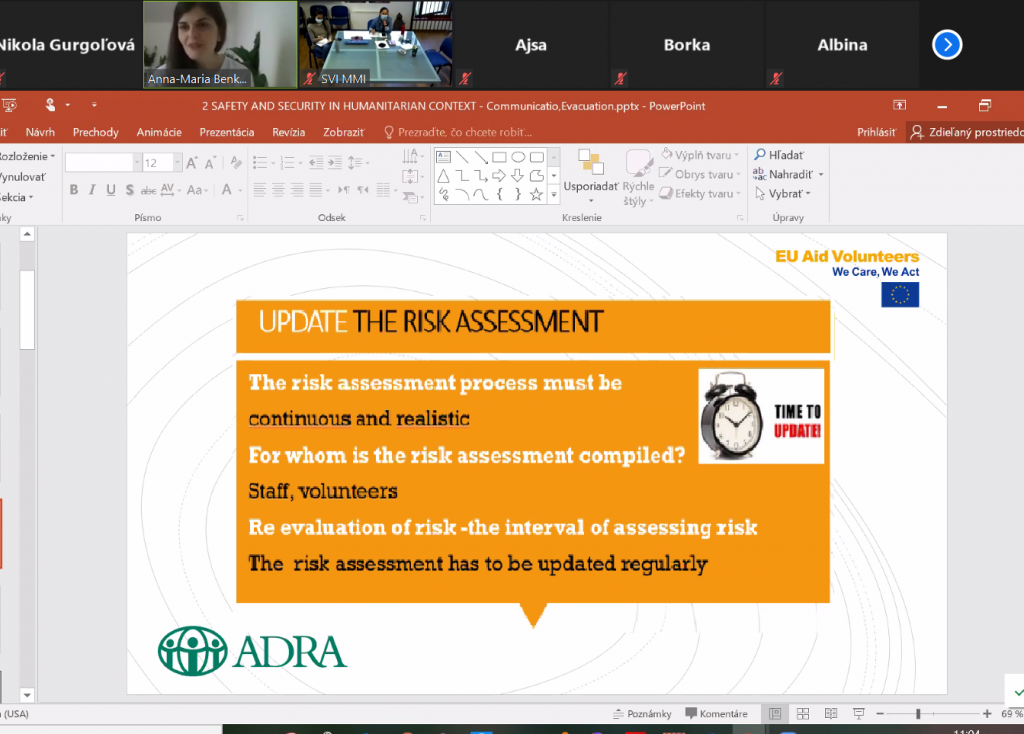
Today we again passed on our knowledge and experience on how to prepare for hosting volunteers. Good preparation determines the volunteer's contribution to the local community. Under the EU Aid Volunteers programme, all organisations have to go through several months of preparation, where they set up processes and rules on how to work with the volunteer, how to ensure their integration in the place of deployment, personal development as well as safety and security. It is precisely on safety and security that a lot of emphasis is placed.
In today's training we focused on risk management, health and safety prevention measures, and creating a communication or evacuation plan. The trainings are part of the XCHANGE project, where together with partners from Italy we are training organisations operating in Latin America, East Africa, but also in Europe. This time we met with partners from Serbia.
By the way, today is World Environment Day, the theme of which is biodiversity. The threat being discussed is the loss of biodiversity. This is closely linked to climate change, which is also resulting in humanitarian crises. That is why these partnerships and exchanges of experience are important for dealing with global challenges and crises, as the coronavirus pandemic has shown us.


Certification for quality, professional, safe and targeted development and humanitarian aid
16.07.2020
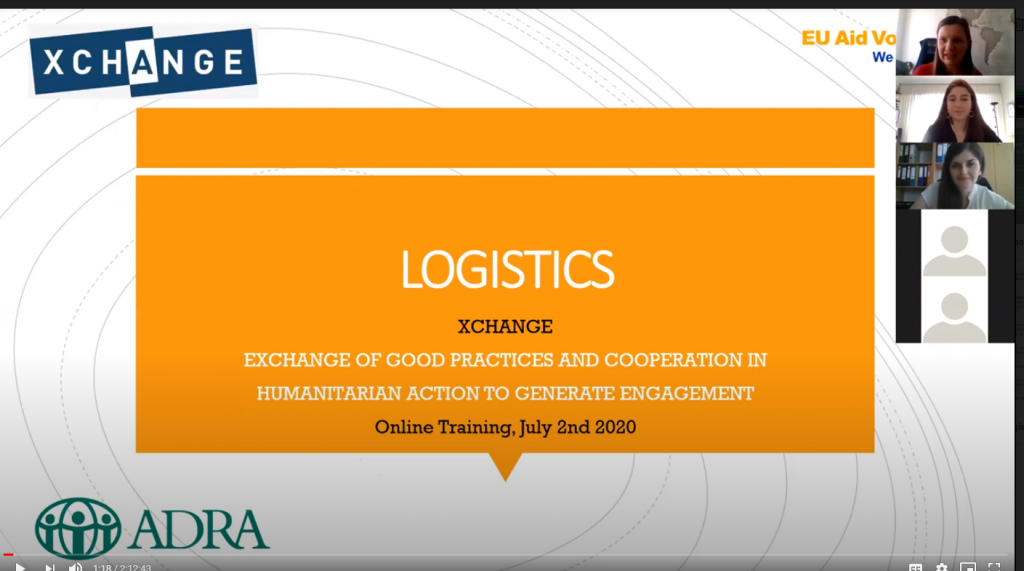
Last week, we completed the training phase, which prepares our partners from 7 non-EU countries to host expert volunteers. ADRA Slovakia as the only certified organization in Slovakia under the EUAV initiative is currently helping 3 Serbian organizations to become part of it. Specifically, the trainings covered the topics:
- SAFETY AND SECURITY. Did you know that, statistically, most deaths of aid workers are not even caused by exotic diseases or war, but by traffic accidents? Organizations undergoing certification must thoroughly analyze all risks and prepare measures to prevent them.
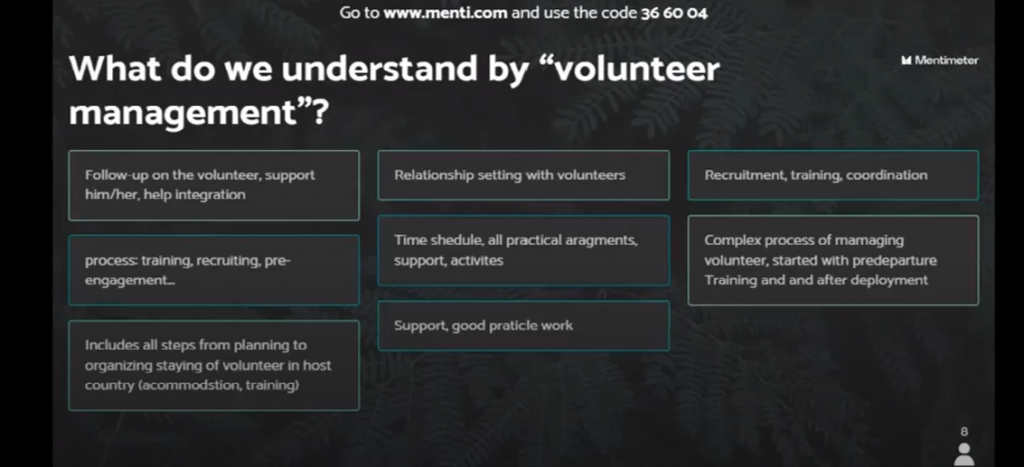
- VOLUNTEER MANAGEMENT AND LOGISTICS OF THE VOLUNTEER MISSION. From several years of experience in sending volunteers, we know how crucial it is to set up mutual cooperation so that, for example, a humanitarian mission does not get bogged down by interpersonal misunderstandings. Thus, causes that can be averted.
- The topic of NEED ANALYSIS is related to this. Host organisations need to undergo self-reflection, to be able to name where their weaknesses lie in fulfilling their humanitarian missions. The clash between the expectations of both organisations and volunteers and the reality must have a unifying moment.
An important part of the cooperation is the sharing of experience in the named areas. Our partners Ekumenska humanitarna organizacija, Merhamet Sandzak, Човекољуббље - Čovekoljublje have been working in the field of humanitarian aid for years, which is a very enriching element of this project. All three work with a wide range of vulnerable groups such as war-affected populations or internally displaced communities, the elderly, Roma communities, ex-prisoners and victims of violence. We believe that just as through our global Adra network, through our partnership with Adra Serbia, we can help in the current difficult situation with the coronavirus pandemic in Serbia, we will also be able to develop joint efforts through our building partnership in conjunction with expert EUAV volunteering with EHO, Merhamet and Covekoljublje.

Closer to the goal
29.9.2020
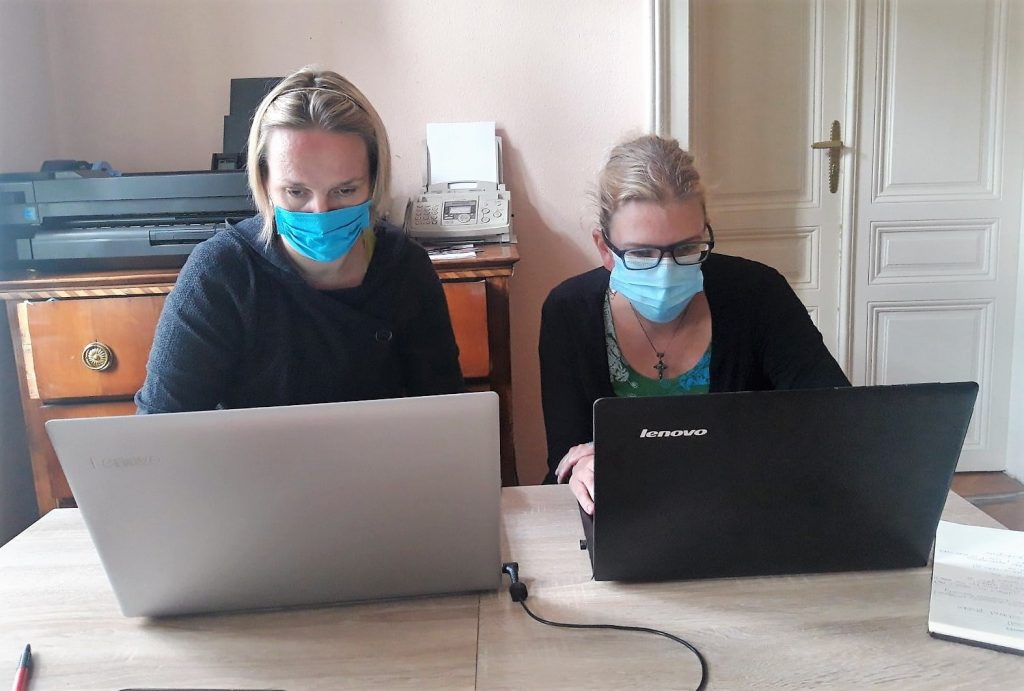
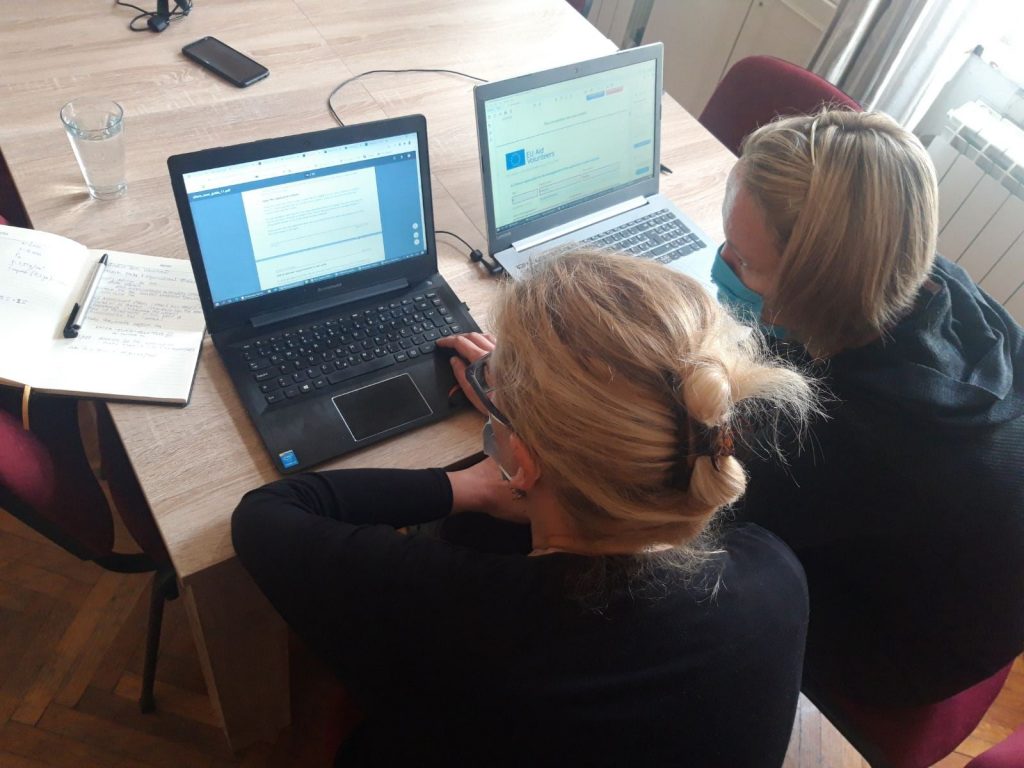
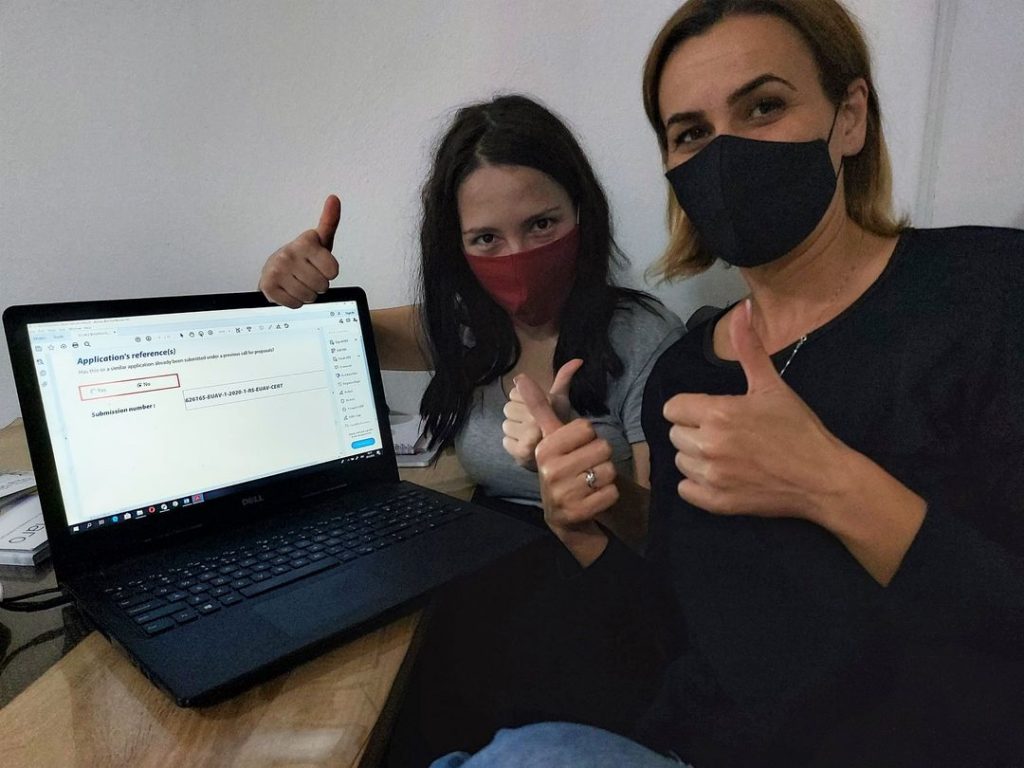
Our partner, the organisation Čовеkoљубље - Čovekoljublje, yesterday „submitted a certification“ to host expert volunteers under the EU Aid Volunteers banner. We have accompanied Čovekoljublje through this process in the form of training and mentoring in the preparation of internal rules in the area of security or specifics of volunteer secondment management.
Čovekoljublje has been operating in Belgrade, Serbia since 1991 and has extensive experience in humanitarian aid. In its early days it helped people affected by war, now in the former Yugoslavia. In recent years she has been working with various vulnerable groups such as victims of violence, the elderly, ex-prisoners, asylum seekers and many others. You can learn more about their meritorious activities here: https://www.covekoljublje.org/en/humanitarian-assisance
Fingers crossed that Čovekoljublje will be successfully certified and will soon be able to welcome its first expert EUAV volunteers!
We have submitted another certification
30.9.2020
Ekumenska humanitarna organizacija, our other partner from Serbia, has also successfully submitted its certification, which allows non-European humanitarian organisations to host expert volunteers from the EU. Obtaining such certification is a prerequisite for safe and professional competence to carry out effective humanitarian work involving a volunteer.
We would like to introduce you to the humanitarian focus of our partner EHO, with whom we hope to put our „hands to work“ through volunteer assignments. EHO has been implementing its social and humanitarian aid in Novi Sad since 1993. Its work is specific in that it represents a cooperation of churches, which has led to the gradual establishment of diaconal groups consisting of 200 volunteers of different faiths in the Vojvodina region. It is proof that even traditional social structures such as churches can be a driving force in the development of civil society. Examples of their work include helping more than 5,000 people in need during the floods in 2014 or 2018, or repairing 480 dwellings. They provide material assistance in the form of food or school supplies to children from socially excluded Roma communities. Their focus and the groups of people they serve are truly diverse. For example, psycho-social assistance, health consultations, pastoral work, food aid, language assistance, job counselling and many others.
Fingers crossed!
For the third time, another filed certification
3.10.2020
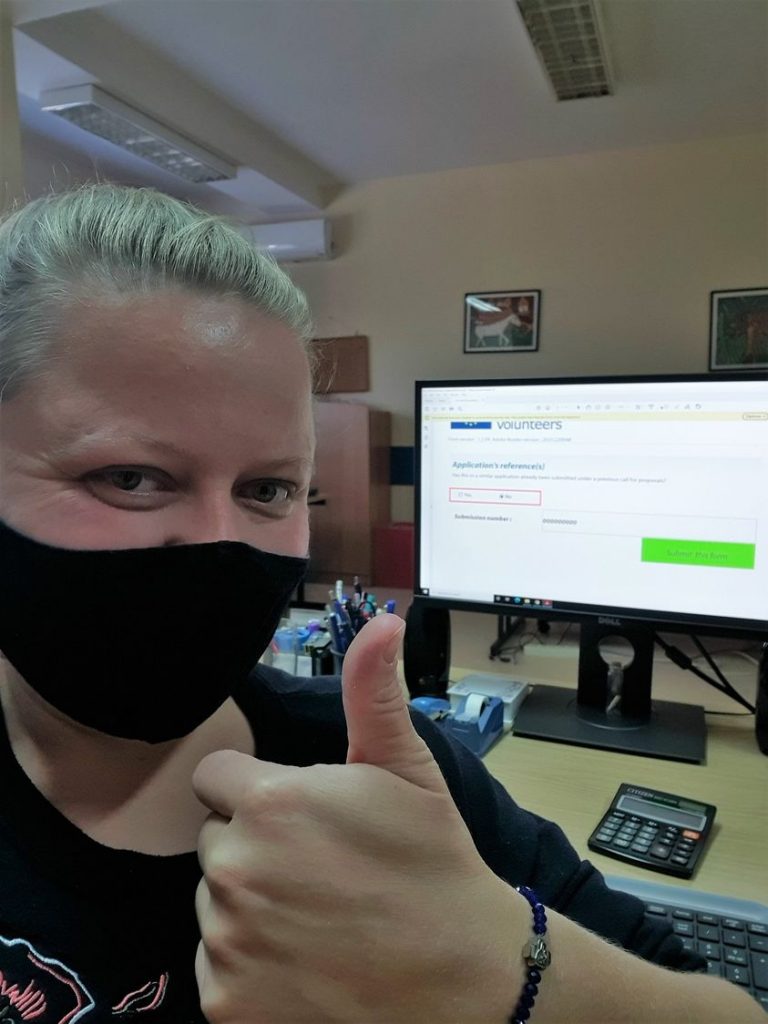
Merhamet Sandzak is our third Serbian partner to bid for the opportunity to host European Union volunteer reinforcements in Novi Pazar in the Sandzak region. Merhamet, like EHO or Čovekoljublje, has spent the last six months strengthening its internal capacities for the future involvement of expert volunteers. How exactly potential volunteers could be involved will be one of the tasks in the next phase of the project. For now, however, we will give you more insight into their activities and focus so far.
Merhamet's humanitarian experience goes back almost 30 years, and its origins date back to the turbulent times of the establishment of an independent Serbia. Currently, Merhamet provides humanitarian and development activities in areas such as infrastructure support and improving the quality of life of marginalised groups in urban and rural areas. Among their recent achievements, we mention, for example, the construction of 17 prefabricated houses for the Roma community in Novi Pazar or returnees and IDPs from Kosovo. Merhamet is also assisting 120 hard-to-employ people and 20 members of the Roma community with vocational or retraining training.
Thirdly, fingers crossed that Merhamet gets certified.
Getting ready for more activities
17.12.2020
We met with partners in the XCHANGE project, which aims to prepare organisations and, indirectly, the communities they work with for long-term hosting of expert EUAV volunteers, for the last time this year. As otherwise, the meeting took place via the Zoom platform. We talked together about next steps - preparing training for future volunteer mentors and mapping good practice examples of how to effectively manage volunteers. We parted with a wish that in that next year the situation would allow us to continue our activities also in face-to-face meetings.

Online volunteering opportunity
9.2.2021
Our partner ASPEm offers online volunteering opportunities for our joint project XCHANGE, in which we, as sending organisations, build the capacity of host organisations to receive European volunteers. The main requirement is knowledge of English, Spanish and Italian. The volunteer will assist with the creation of a digital library of volunteer management tools and other tasks within 6-10 hours per week. The duration is 6 months. More information about the selection process here. You can apply until 3.3.2021.

Successful certification
5.3.2021
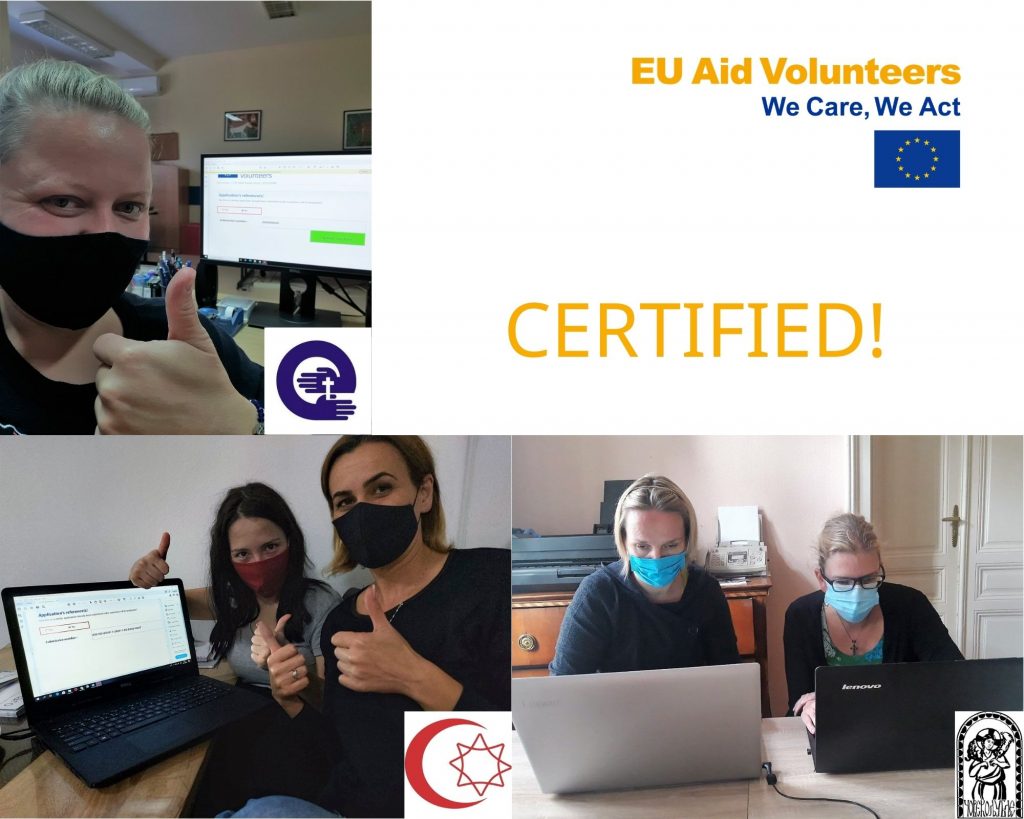
We are very pleased that our partners from Serbia, namely Merhamet Sandzak, Čovekoljublje and Ekumenska humanitarna organizacija, have been certified under the EU Aid Volunteers programme, making them a trusted partner in hosting expert volunteers from Europe. The certification is the result of work over the past year in this project, where in a series of trainings and during individual mentoring sessions under the guidance of European organisations, the three Serbian and other partner organisations have been strengthening their skills, building processes, creating rules that will help them to effectively manage volunteer placements according to EU standards.
Congratulations to our partners!
Share with us good practice in volunteer management
6.5.2021
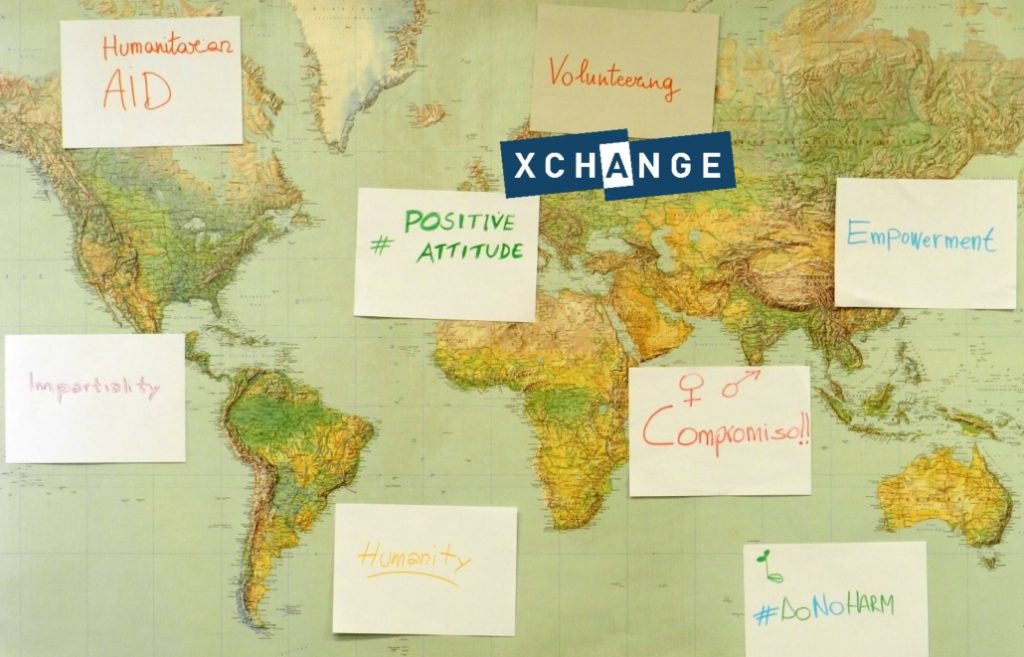
Preparing our partners in low-income countries to host future volunteers is far from the end of certification. We are continuing with a series of trainings that will deepen our partners' skills in inclusive volunteering, effective communication, application of information technology in connection with different aspects of volunteering, etc. We are currently conducting an international survey to map examples of good practice in volunteer management. Together with 17 other organisations from 10 countries, we are mapping existing tools, manuals or case studies that demonstrate the successful integration of volunteering into the day-to-day work of an organisation, or the ways in which organisations manage volunteers. It also includes a questionnaire survey, which is open to organisations from Slovakia. If you are one, or know one, please encourage them to contact us. Our knowledge of working with volunteers both nationally and internationally is valuable. Thank you!
Call for organisations: do you work with volunteers? Tell us how.
9.6.2021
We are still mapping examples of good practice in working with volunteers. Share your experiences and we will use them to make the work of our partner organisations in low-income countries more effective as they prepare to receive the expertise of hosting volunteers from the European Union. A digital library will also be an output. Last few days left to get involved. More info will be provided in the report (office@adra.sk). Thank you!
Let's welcome Eilidh, our new online volunteer
09.07.2021
“Hi everyone! My name is Eilidh Rose MacEòghainn and I am an online EU Aid volunteer with ASPEm. I'm deaf, originally from Scotland and interested in the work of EU NGOs around the world. I have recently completed a PhD focusing on deaf education and skills in the context of the Global South. For this reason, I would like to learn more about the processes that NGOs in the EU undertake when working with NGOs in other countries. I am particularly interested in how organisations are improving their accessibility to the Deaf and disabled communities. By the end of October, I will be assisting the Xchange project consortium in creating an online resource library on volunteer management.”
With Slovak ADRA volunteers about volunteering abroad
6.8.2021
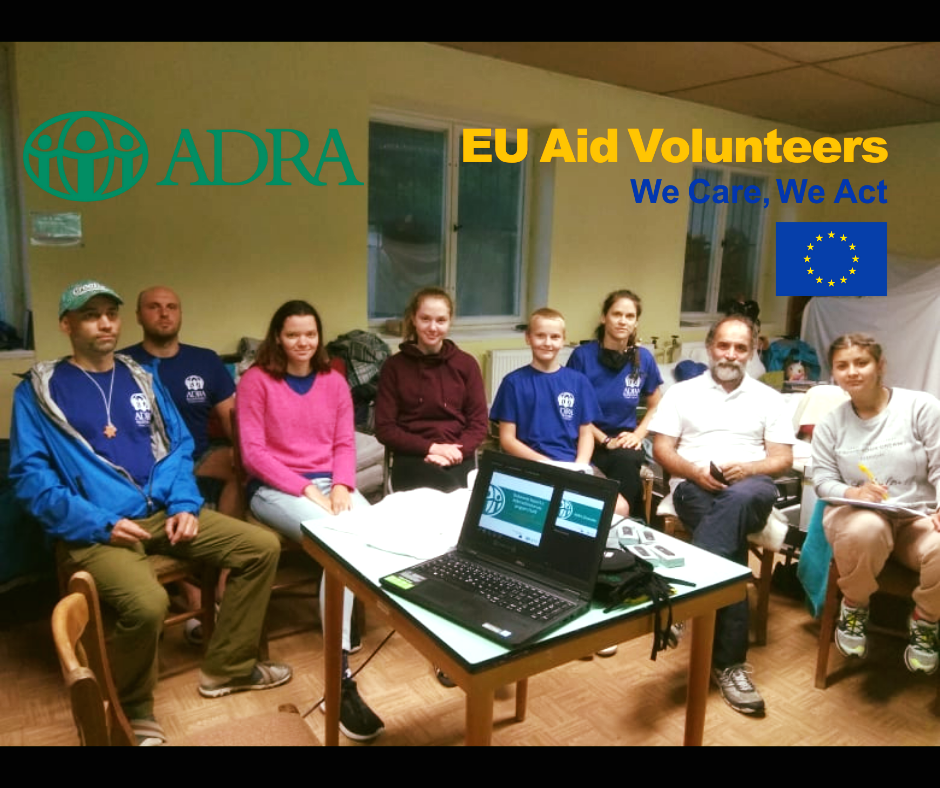
We finished the 2-week summer volunteer camp in Pohorelska Masha with a presentation about the EU Aid Volunteers initiative, which, in addition to sending volunteers from the EU to low-income countries, also involves building the expertise of local organisations through certification. After a long time, we were finally able to realize our „ADRA evening“, although untypical. We introduced our local volunteers to how the whole broadcast cycle works, what all the participating organizations have to manage in order to host a volunteer. Through short exercises we also put ourselves in the shoes of future volunteers and their host organisations. Based on our own experience from the two weeks in Masha, we prepared a so-called needs assessment, i.e. an assessment of the needs of the Pohorel Masha social services home. In three groups we analysed the needs of the home from the perspective of the clients, the staff and the volunteers, and proposed possible solutions.
We believe that the discussion was a pleasant end to our volunteering activities in Masha and at the same time a stimulating encouragement to try volunteering beyond the borders of Slovakia.

Visit to the Slovak Embassy in Belgrade
7.9.2021
After a long pandemic hiatus, ADRA is on the road. Project Managers Anna-Maria and Nikola are in Serbia, where they have a busy schedule ahead of them this week. Yesterday they had a meeting at the Slovak Embassy in Serbia, which is an important partner of all our activities in the country. We talked with Ambassador Fedor Rosoch about:
- Capacity building of local humanitarian organisations Ekumenska humanitarna organizacija, Merhamet Sandzak and Човекољуббље - Čovekoljublje
- Planned deployment of two Slovak volunteers to Serbia
- Help homeless people in Belgrade with ADRA Serbia
Thank you for a pleasant meeting, constructive conversation and long-term cooperation! We will bring you more news from the Serbian trip soon!
News from our trip to Serbia: Preparing local humanitarian organisations to receive volunteers
13.9.2021
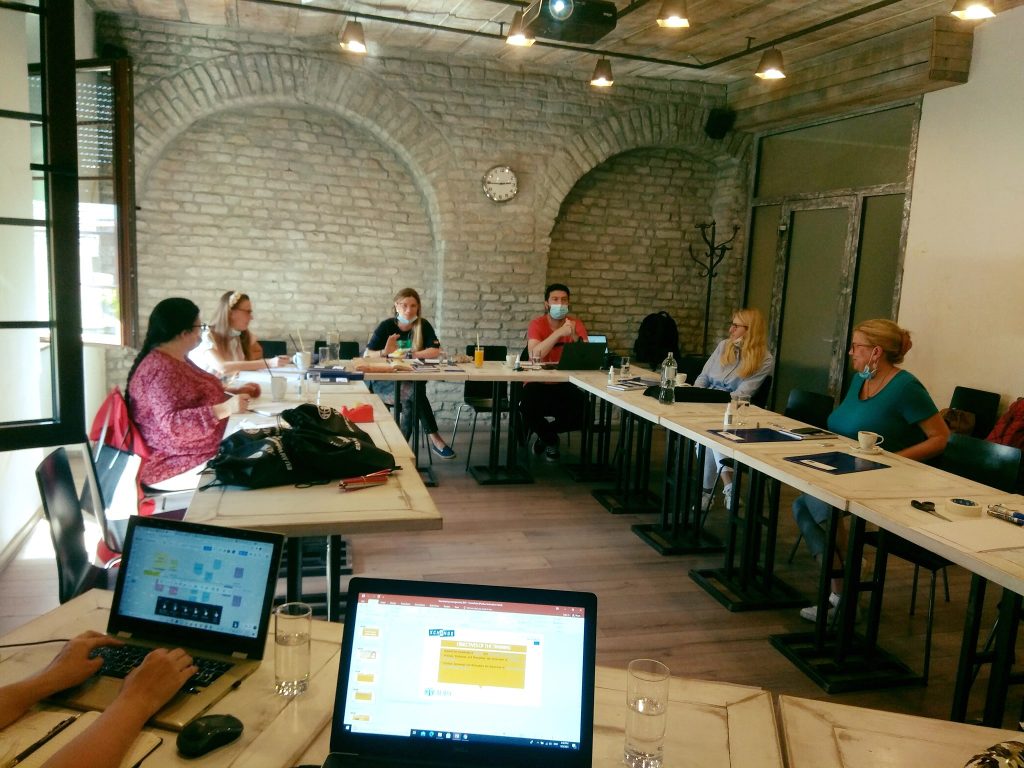
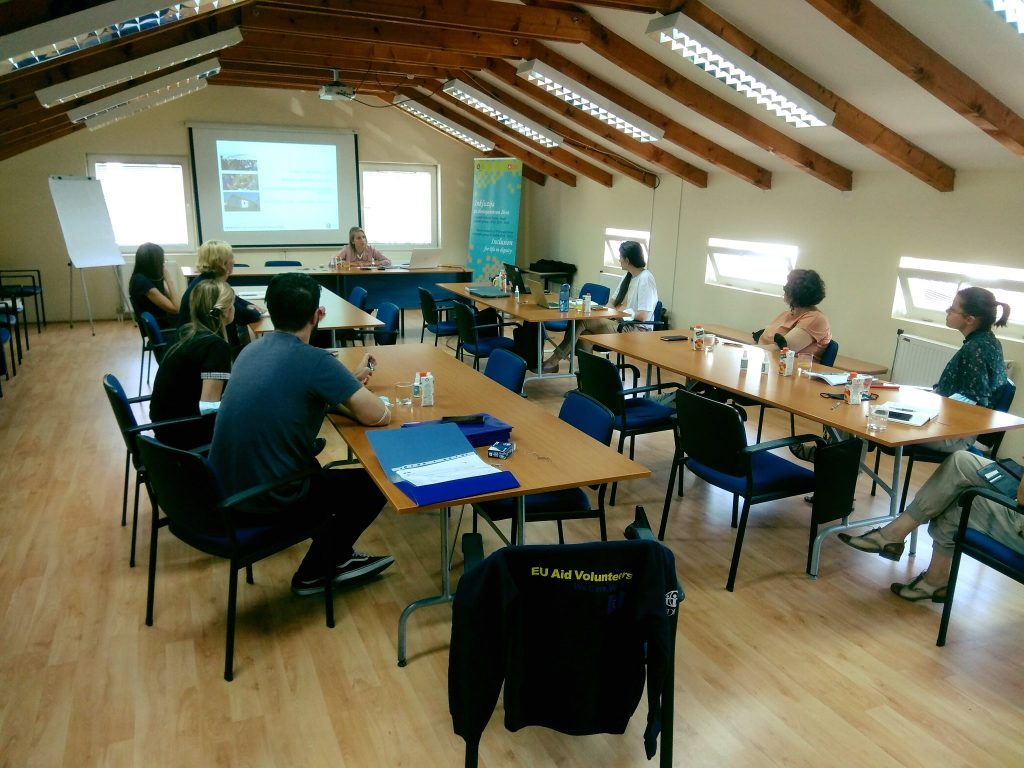
We have finally managed to exchange computer screens for irreplaceable face-to-face meetings with our Serbian partners EHO, Merhamet and Čovekoljublje . Our meeting consisted of training and sharing experiences in volunteer management, especially on the topic of mentoring, support for professional and personal development, as well as conflict management techniques. We also jointly discussed the adaptation to the changes in the EU Aid Volunteers programme, which will soon join the more well-known European Solidarity Corps programme.
The host organization EHO presented its projects that help Roma communities, seniors, vulnerable women and children, migrant returnees and other vulnerable groups in Serbia with very complex and intensive activities. For example, the programme for improving the socio-economic situation of marginalised families in the Vojvodina region. It consists of helping children to maintain, improve or integrate into the school environment, including through individual mentoring. Their parents are helped to secure an income, for example in the form of mini-grants to start their own trades or similar business plans.
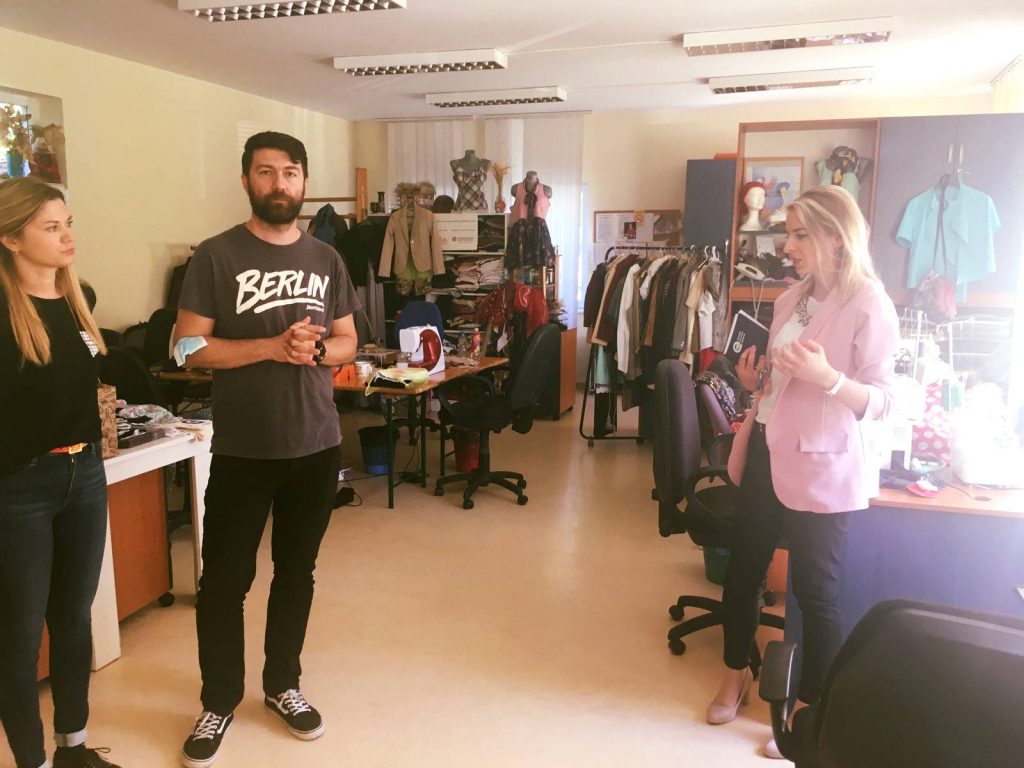
We also saw the premises, where, in addition to project management, there is a laundry for the socially disadvantaged inhabitants of Novi Sad or a tailor's studio. In the studio, women who are hard to employ and women going through a difficult period in their lives, often with psychological trauma, find an encouraging environment. They take sewing courses here and subsequently make uniforms as well as fashionable clothes.
It was humanly pleasant to meet and speak to our compatriots, Serbian Slovaks, who have been living here since the time of Maria Theresa and are intensively involved in programs to help vulnerable groups in the EHO organization.
To make volunteering fall on fertile ground
19.9.2021
This is how we could name what we have been doing in ADRA Slovakia for a long time. In other words, in our projects supported by the European Union, we transfer to low-income countries the knowledge, tools and experience on how to manage the deployment of volunteers so that it bears fruit. This is what our visit to Serbia as part of the Xchange project was all about.
Our first project meeting during the pandemic took place in Novi Sad and Belgrade. We were warmly welcomed by our colleagues from EHO - Ecumenical Humanitarian Organization. EHO presented us their team and activities - 5 program areas: 1) humanitarian work, 2) interfaith and interethnic cooperation, 3) diakonia, 4) social protection and 5) civil society, through which they are transforming the lives of vulnerable communities such as Roma, people with disabilities, children and youth growing up in adverse environments, migrants, etc. We have also introduced the activities of ADRA Slovakia.
This meeting allowed us to have a more authentic perception of the activities of local partners for the benefit of the most vulnerable populations in Serbia. The need for help is intense, meritorious activities are being done, which gives the potential to provide our help just by sending volunteers. Roma, seniors, women, homeless people have similar, often existential problems as in Slovakia. Our cooperation can thus be mutually enriching. We believe that we can only develop as a society if we do not forget the most vulnerable.
We trained on how to support the volunteer to reach their full potential and enrich both the organisation's team and the vulnerable people they serve. Partners welcomed our advice and especially our experiences, describing how we overcame barriers they may face in relation to volunteering. More through the lens below!
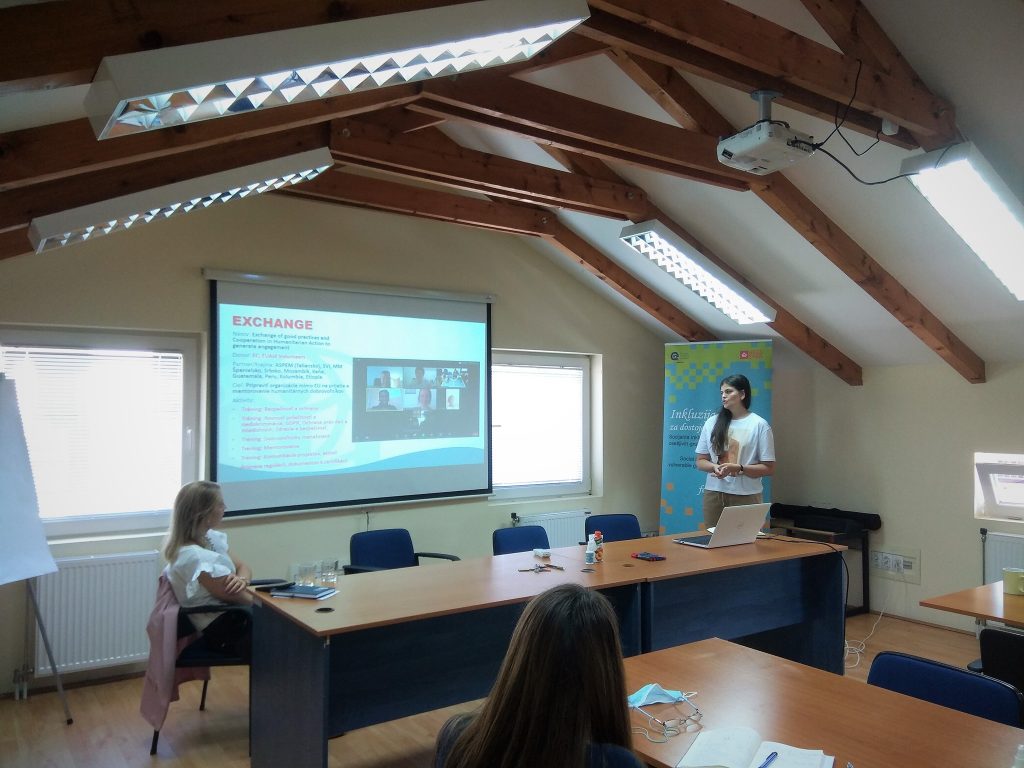
Colleague Anna-Maria summarises the activities of the joint Exchange project, of which this week's meeting was a part. The project is part of the EU Aid Volunteers initiative, the aim of which is to obtain certification (successfully completed). This confirms the mastery of management and standards in hosting expert volunteers from the EU. We are currently continuing to deepen our skills through training and experience sharing.
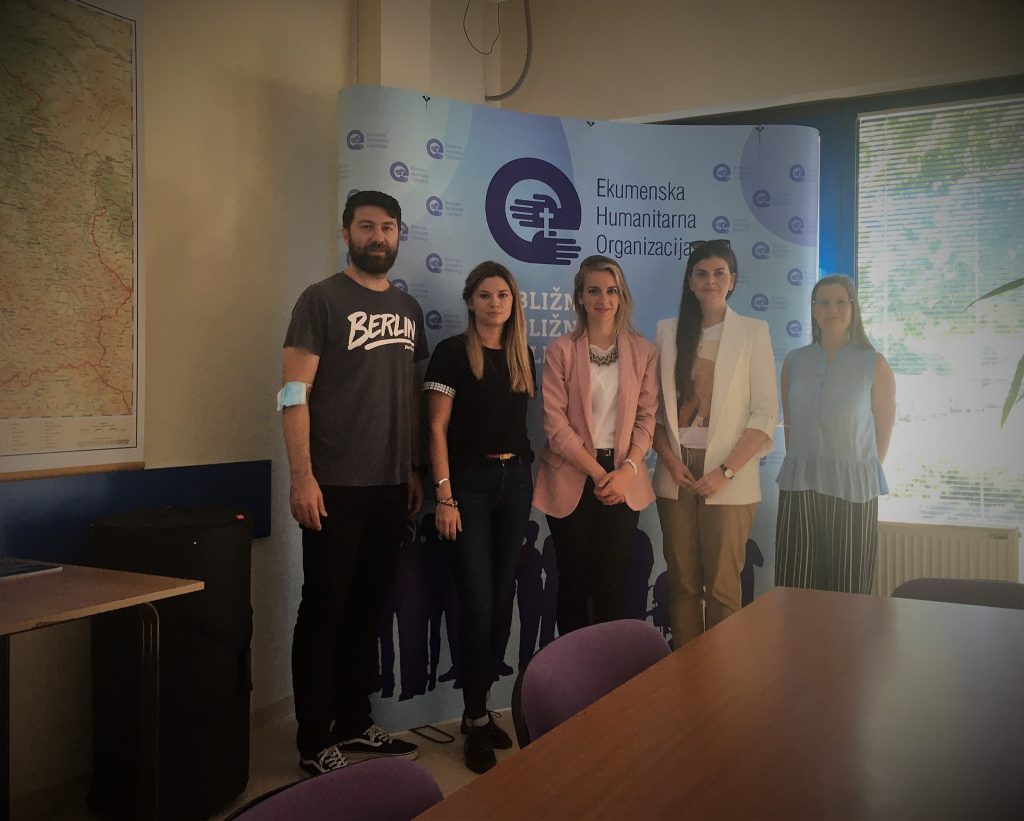
Standing from left are EHO colleagues, Milisav and Vedrana, who are directly involved in the Xchange project. Milisav also leads a project that supports the reintegration of socially disadvantaged people, the so-called „returnees“ from Germany. He has extensive experience in youth work and non-formal education. Vedrana started in EHO as a volunteer and is currently in charge of prevention and helping children who find themselves on the streets. In the middle is EHO's director Anna, who started leading it just at the time of the pandemic. Anna is a Slovak living in Serbia, and she strives to continue to enhance and sustain support for EHO's important programs. And finally our colleagues, Anna-Maria and Nikola from ADRA Slovakia.
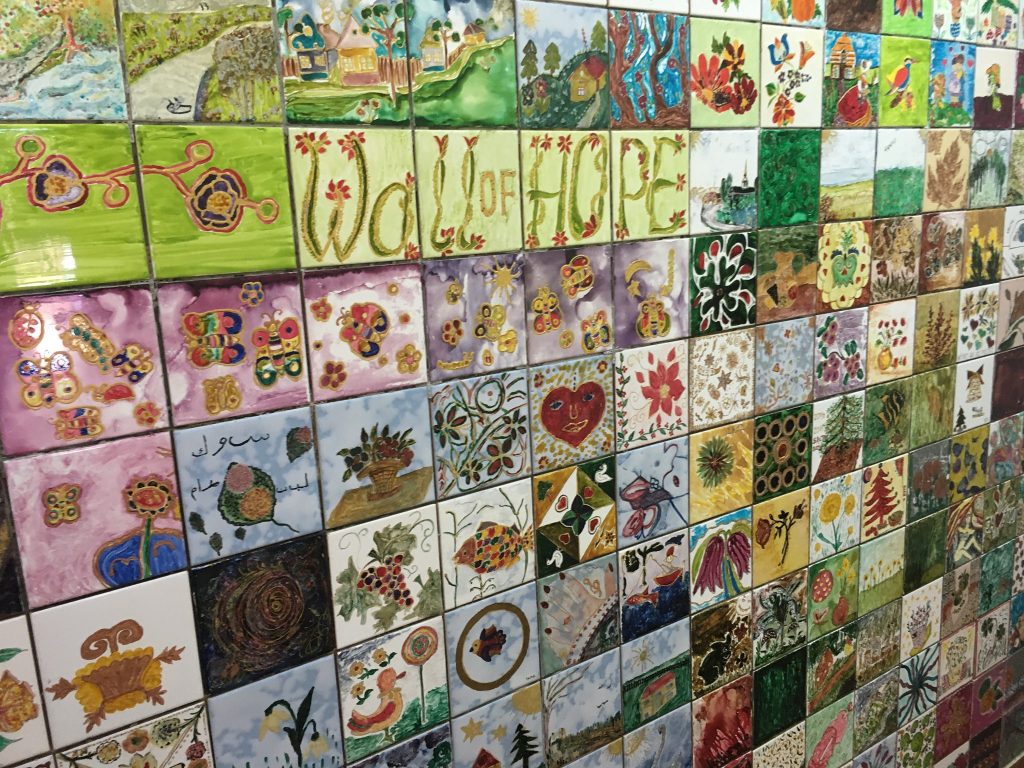
„Wall of hope“ or „Wall of hope“. This beautiful wall is located in the EHO building and was created during its construction in 2006. The building was built to meet the needs of the organization through the support of church donors. It greatly facilitated the coordination of the work of the entire team, which until then had been operating in 8 rented spaces scattered throughout Novi Sad.
The mural aptly describes EHO's mission and vision - „A Civil Society Promoting Human Dignity.“
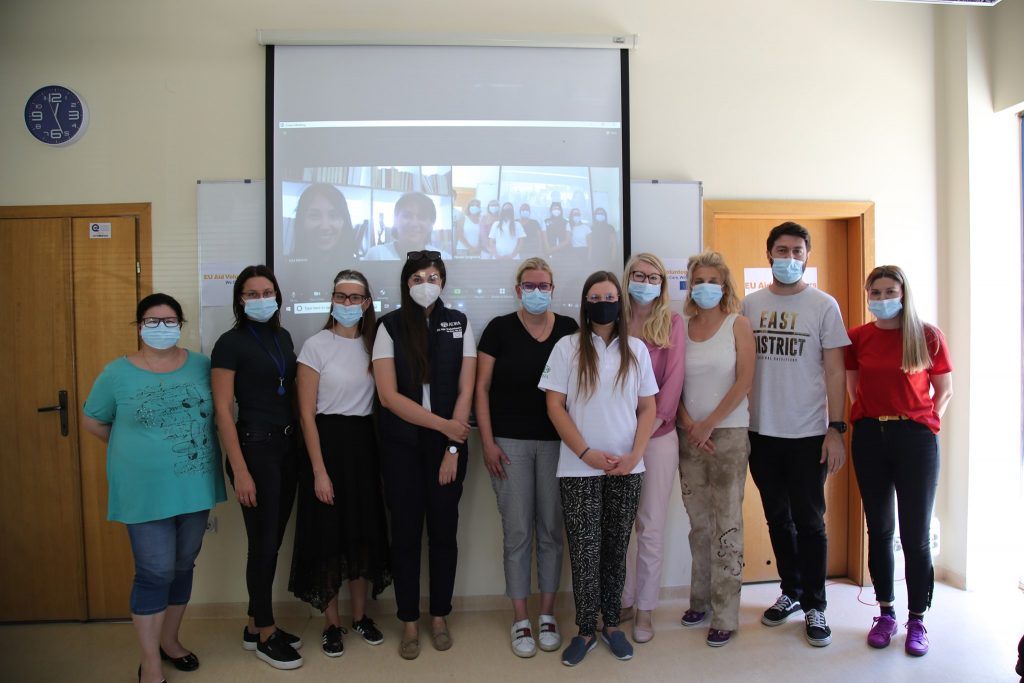
The ADRA Slovakia project team, Anna-Mária and Nikola, in the middle, together with their colleagues from Čovekoljublje, Dragana and Milena, based in Belgrade. From left and right colleagues from EHO - Katalyn, Miroslava, Želka and from the other side Vedrana, Milisav and Mária. On the canvas in the background Albina and Aisha from Merhamet Sandžak in Novi Pazar. Unfortunately, due to the worsening pandemic situation, my colleagues were forced to stay at home and join via the zoom platform.
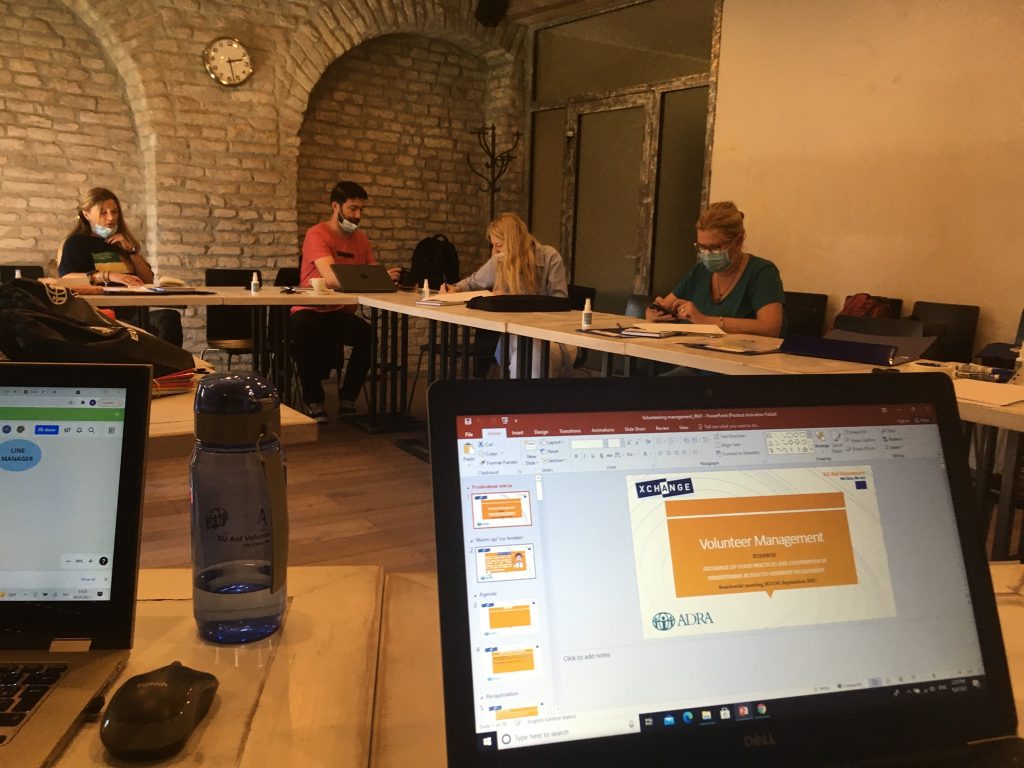
We started the trainings with the topic „Managing volunteers“. In the EUAV initiative, both sending and receiving organisations are involved and complement each other. Apart from supervision in achieving project goals, the key activity is mainly mentoring, which can change the whole perception of the project itself. If done well, it is a prerequisite that the volunteer will feel welcomed, integrated, expected, listened to, understood and supported. These are important circumstances that play a part in the volunteer successfully completing the activities and being motivated to commit fully to the project.
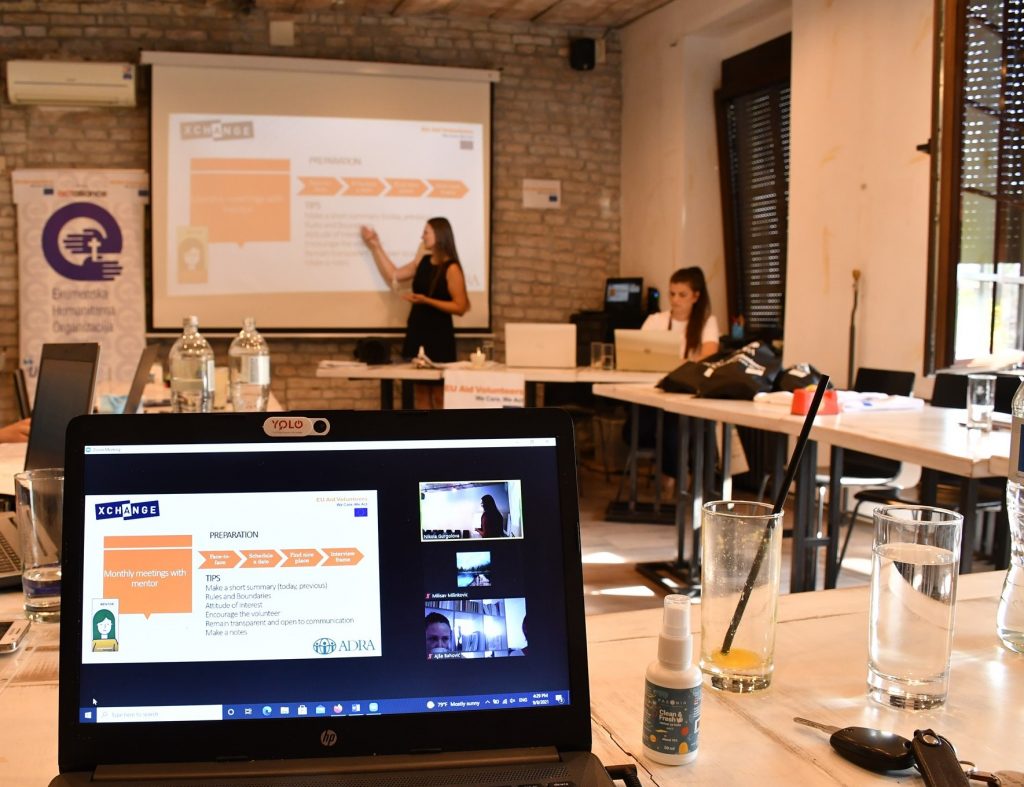
There are important steps to remember during the mentoring process. First of all, regular contact and reflection on the activities carried out. On a monthly basis, the mentor takes a close interest in the successes, the challenges the volunteer is facing, both in the execution of the tasks, but also in the integration, overcoming culture shock, the relationships he/she is building with the local team, but also with the community members. Often these are different vulnerable groups. In addition, it is a mid-term evaluation of the secondment, when there is still time to avert unfavourable developments, especially if the activities are not progressing according to plan, or if it is not reaching the desired level of skills as defined in the individualised professional and personal skills development plan of the volunteer himself/herself.

For my colleagues Milena and Dragana from Čovekoljublje, the timing of the training was perfect. Starting next week, they will host their first international volunteer, our Tamara, as part of the SlovakAid programme. So, you can look forward to hearing about and sharing the experiences of Tamara's year-long assignment in Kragujevac soon.

Another key area or skill is to successfully manage challenges and conflict situations that may arise. These may stem from cultural differences, lack of communication or a different understanding of context. How to prevent conflicts, how to eliminate them and how to resolve them if the first two mechanisms fail, we reflected in the next part of the training.
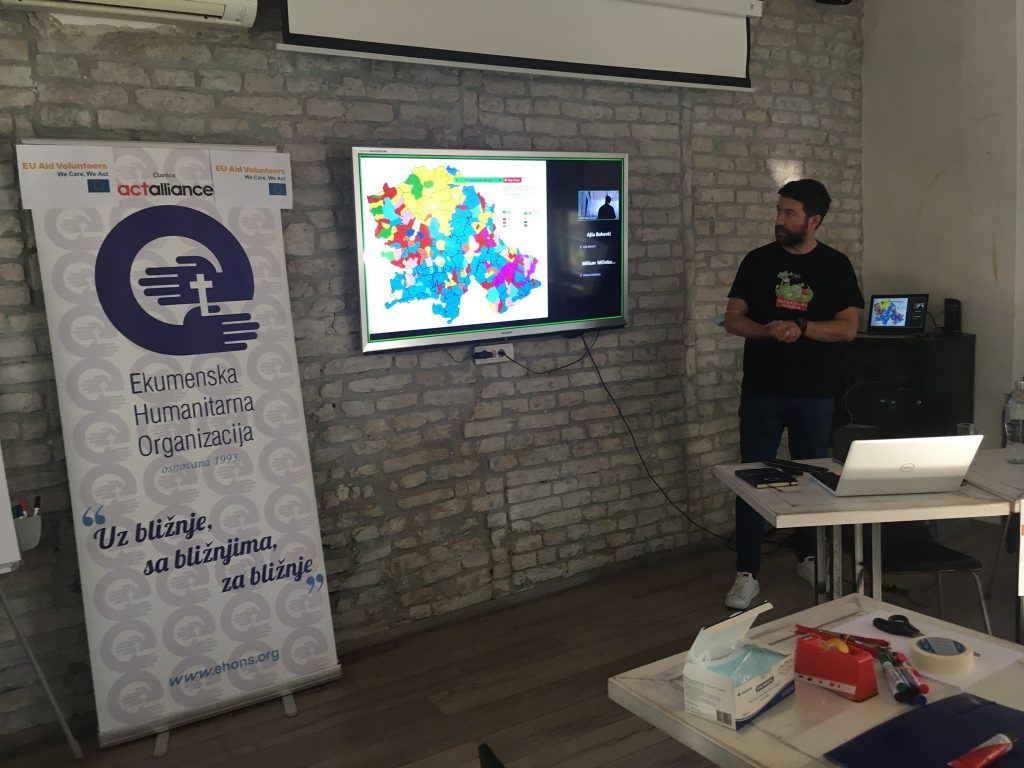
These themes were lightened by an interactive activity in which all three organisations presented the distinctive features of their region's culture in a visual way. We learned many interesting facts about the cultural diversity of Serbia, such as:
- Vojvodina, which includes Novy Sad, where the EHO is based, recognises the rights of 6 national minorities, including our Slovak minority, which allows Serbian Slovaks to study in Slovak and communicate in Slovak in official relations. Novi Sad hosts the popular music festival EXIT, which is associated with a student demonstration against practices that oppress freedom and democracy.
- Merhamet Sandzak from Novi Pazar told us a beautiful story about a volunteer who was helped to „kick-start“ her talent for depicting the specifics of different places in an engaging way, which she started to do professionally - creating tourist guides. During her posting in their town, the volunteer noticed a local custom - taking off her shoes before entering. In doing so, she helped them discover something that they took for granted, but was unheard of for foreigners from Western countries.
- our colleague from Čovekoljublje, who is based in Kragujevac in addition to Belgrade, introduced us to the Šumadija region, the centre of which is this city. It is an area with beautiful nature, characterised by forest cover. We also listened to a song by the famous Serbian singer Olivera Katarina called „Su, Su, Sumadijo“
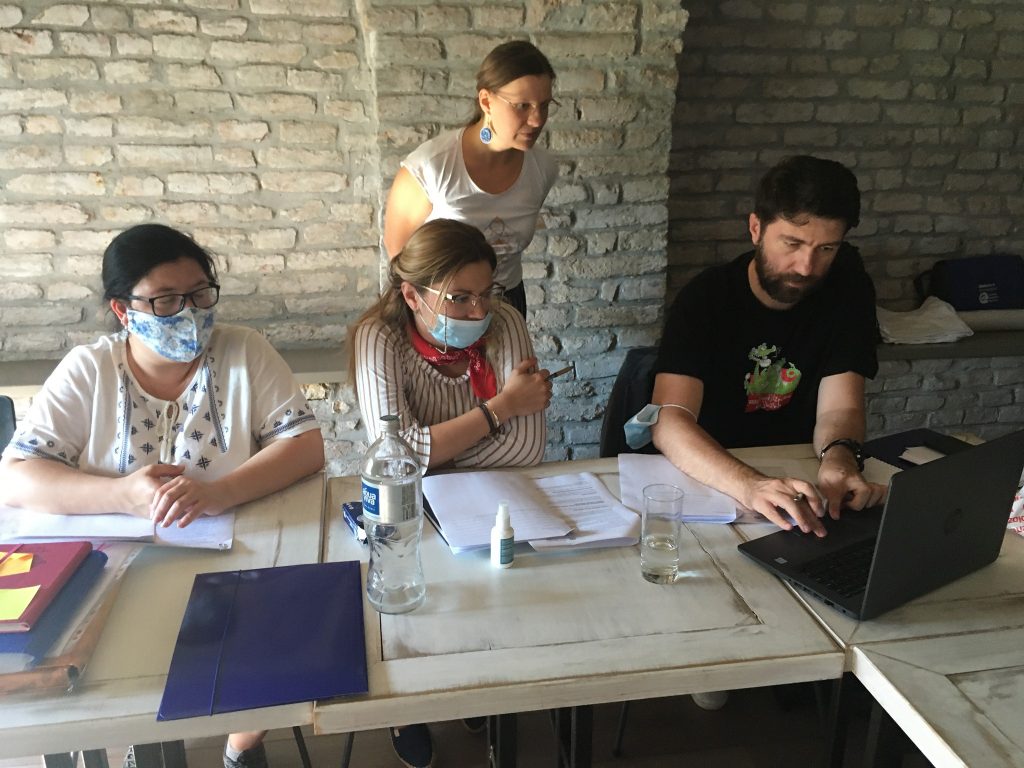
The training included two case studies from the practice of ADRA Slovakia. In the photo we are discussing one of them.
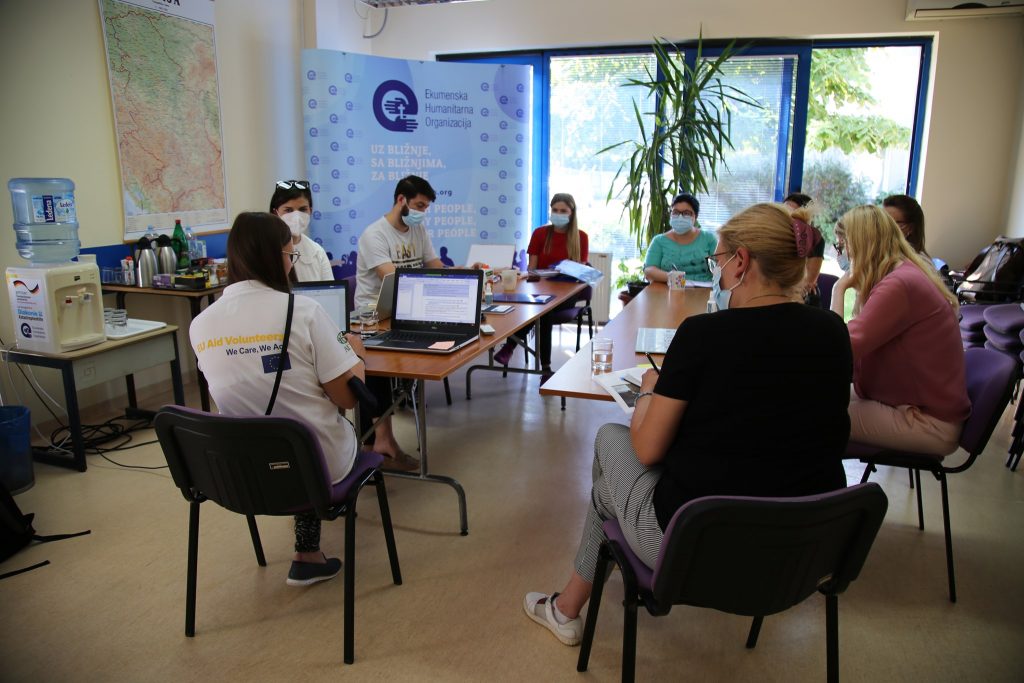
The final part of our weekly meeting was devoted to the process of transitioning the EUAV programme into the better known European Solidarity Corps programme. A prerequisite for joining the programme is to obtain the so-called Quality Label. This is to harmonise and adapt the volunteering experience within the ESC, which is slightly different from that of the EUAV.
SHARING EXPERIENCES IN BELEGRAD
30.11.2021
We spent last week in Serbia again, where we met with our partner organisations Merhamet Sandzak - Official site,
Humanity - Philanthropy a Ecumenical Humanitarian Organization. We have implemented another series of trainings and experience sharing in the field of volunteer management.
All three Serbian organisations carry out activities with the help of local volunteers. It was very beneficial for us to hear how they involve volunteers, for example, in the integration of so-called returnees, i.e. people from socially disadvantaged backgrounds who have not been able to get asylum in Western countries and had to return to Serbia. This process is particularly difficult for children, as they are often marked by trauma and do not feel at home either in Serbia or in the country to which they have migrated. The partners clearly agreed that without a supportive network of local volunteers, they would not have „made these activities happen“.

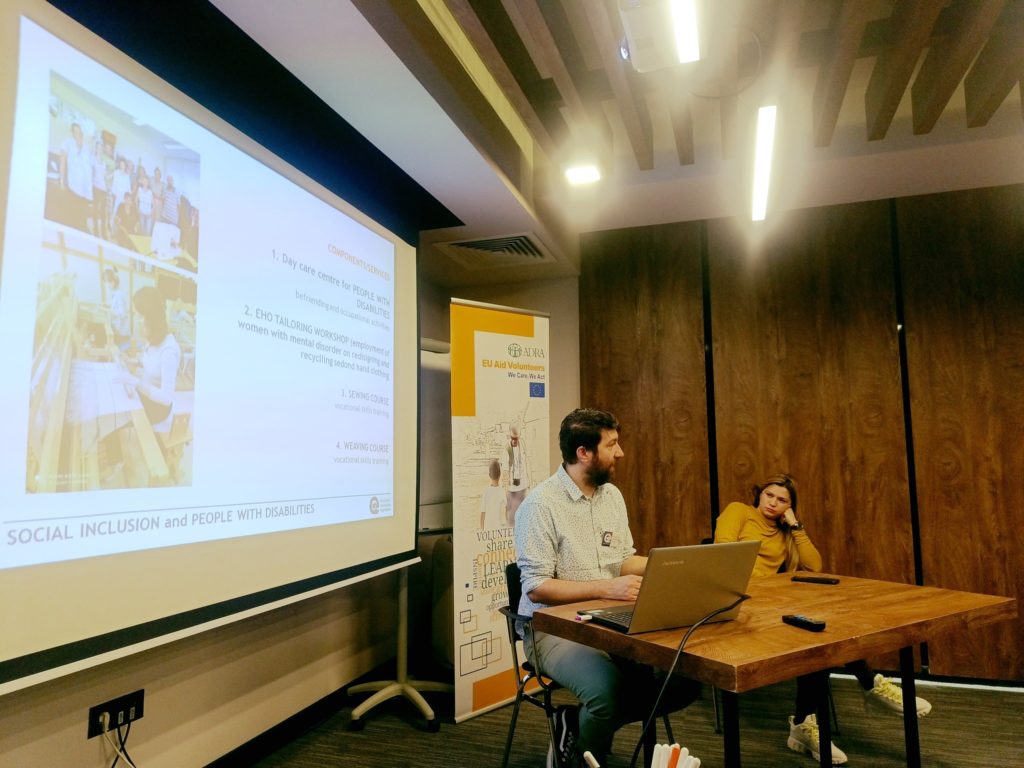
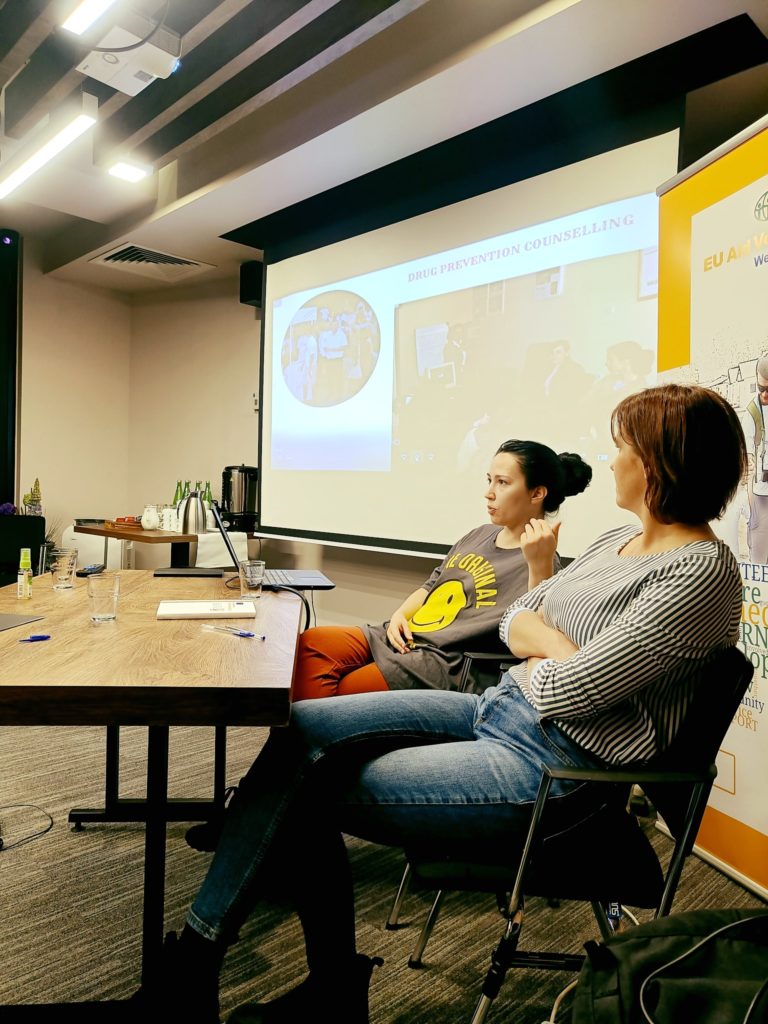
ADRA tries to support them by sending volunteers. For the last two years we have been developing tools, processes or building skills together to make volunteer engagement effective and beneficial. In particular, we are focusing on the context of receiving foreign volunteers, which has been the goal of our partnership so far. Support would be welcomed in the form of hosting international volunteers with specific expertise that they lack. Therefore, this time we have conducted trainings on needs assessment, monitoring and evaluation.


All three organisations are grassroots organisations, i.e. active directly among the people, and of course we could not leave this aspect out. Together we visited our other partner, Adra Srbija, in the field. Under the Branko Bridge we observed DrumoDom in action. The representative of the Slovak Embassy in Srpska, Mrs. Monika Podsklanová Šuhajdová, also delighted us with her participation.

We also used our visit to Serbia to meet with our two SlovakAid volunteers Dominique and Tamara, who started their volunteer assignments this autumn. We were pleased to see that both of them have already settled in, are familiarizing themselves with the mission of their host organizations ADRA Serbia and Covekoljublje, and are gradually gaining practical experience in the field.

 EN
EN  SK
SK