




Dominika TužinShe worked as a volunteer at ADRA Albania, where she supported project management. In her contribution, she presents the experience of the nuns and young doctors who work on the frontline in this country.
. . .
With this article I would like to share the experiences of the nuns who have been living in the Albanian village of Fjer for almost ten years. They run an outpatient clinic there that provides crucial nursing care. Thanks to their long-term presence, they have had the opportunity to penetrate deeply into the Albanian culture and mentality. To their stories, I have added the insights of the young doctors, Janka and Steve, who spent four months in Fjer. The aim of this text is to show the contrast between a rapidly developing country, aspiring to join the EU, and the deep-rooted traditions that still shape local society today.
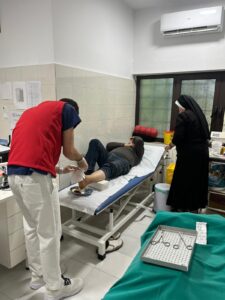
More than just a dispensary
The nurses' job is mainly to treat complicated wounds, manage long-term treatment and help in cases where state health care is unavailable. However, the nurses point out that in addition to diagnoses, they often encounter a high level of loneliness among the older generation in Fjeri. Many residents visit them more because of the need to confide and stay in someone's company. Loneliness is often a consequence of the massive outflow of young people to work abroad. This leaves the elderly alone, with the care of grandchildren often resting on their shoulders.
A system where the patient pays extra
A country's health system directly affects the quality of life. The average pension is around €100, and although some medicines are „free“, their effectiveness is low. Therefore, relatives often send better quality medicines from abroad - for example, by liner buses from Greece. Although there is health insurance, many do not pay for it because it covers almost no real costs for hospitalisation or interventions. Thus, in practice, patients often find that the extent to which they are informed about their condition depends on the direct financial motivation of the doctor.
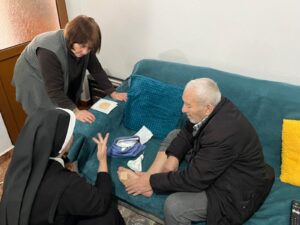
Mentality vs. treatment
According to the nurses, progress in treatment is slow not only because of the system but also because of the specific approach to health. It is common to discontinue medication as soon as the first symptoms pass, leading to relapses. Work in the outpatient clinic therefore involves constant education. While more educated patients are aware of the importance of this care and sometimes contribute financially to the running of the clinic, people from weaker social classes sometimes take it for granted.
The urban-rural divide
It is important to distinguish between life in Tirana and life in the countryside. While the capital is overpopulated and almost all business is concentrated there, the villages are becoming depopulated. The younger generation, influenced by the internet and social networks, sees their future more abroad, which they are actively working on by studying languages.
However, traditional gender roles and a specific work ethic still dominate the countryside. The civil service and the health sector struggle with chronic shortages of materials. Because the nurses' clinic is supported by a Slovak donor (the Congregation of the Daughters of St. Francis of Assisi, the St. Elizabeth College of Health and Social Work, and donations from the people of Slovakia), it is one of the exceptional facilities in the region that has the necessary equipment.
The legacy of the past and religious tolerance
The legacy of the communist regime, which perceived the state as the „enemy“, can still be felt in Albania. This attitude (self versus state) is manifested, for example, in the low care for public space. Paradoxically, it was the harsh oppression of religions during communism that contributed to today's high level of tolerance. Mixed marriages are common and Christians or Muslims participate in each other's ceremonies.
Janka and Stevo experienced a Catholic-Muslim funeral in Fjeri, which was a parade of fascinating customs - from separate rooms for men and women to the ritual toasting with rakia. The traditions also include what are known as weepings and a 40-day period of mourning during which loved ones take time off work.
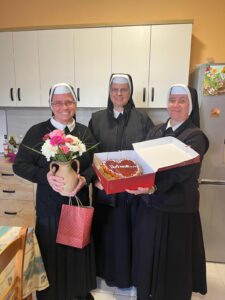
Hospitality above all
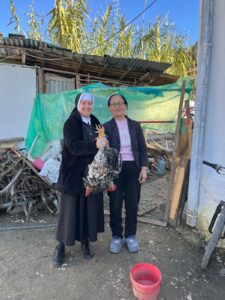
If we were to highlight the most striking characteristic of the Albanians, it is their immense generosity and hospitality. Nurses are regularly invited to lunch with patients who want to thank them. Albanians are able to take a loan just to arrange a decent feast for their guests. Janka and Stevo, on the other hand, have an unusual memory of gifts in kind - they received a live hen or even a bull's head from their patients as a token of their gratitude right in their living room.
Conclusion
Albania is a country of two faces. On the one hand, it attracts tourists with its modern resorts and beaches, while on the other hand, deep-rooted patterns of behaviour from the past still persist. Some traditions, such as family cohesion and hospitality, are admirable, while others hinder the necessary modernisation of society. Turning this potential into real systemic change is likely to take at least another generation.
. . .
The deployment of volunteers is funded by the Official Development Assistance of the Slovak Republic.

 EN
EN  SK
SK