



Syria
Rebuilding water infrastructure for communities affected by the earthquake in Syria
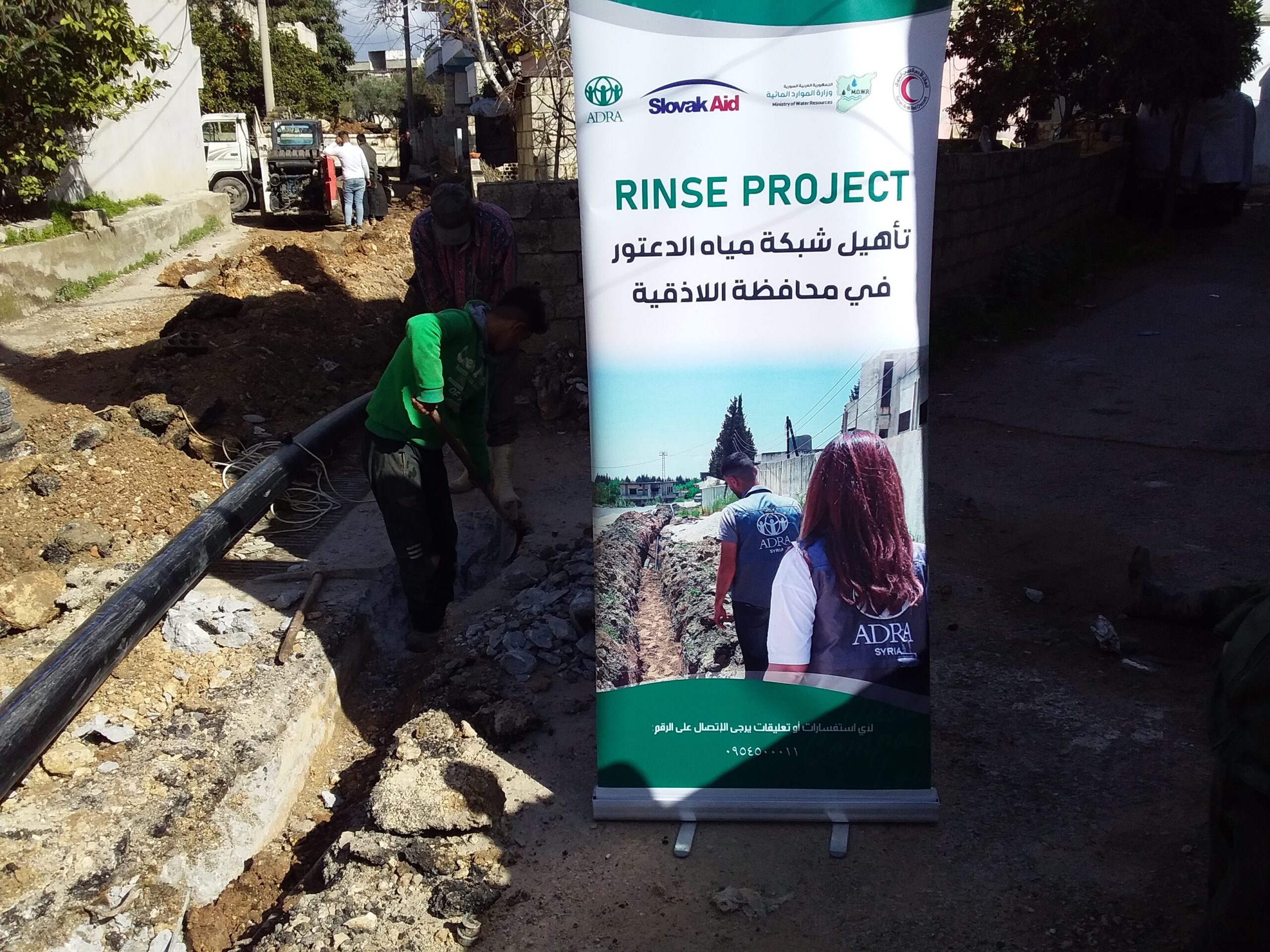
The project provides access to potable water and functional water supply infrastructure for 34,000 vulnerable Latakia residents. Project activities include the rehabilitation of water supply networks in three earthquake-affected areas.
Situation
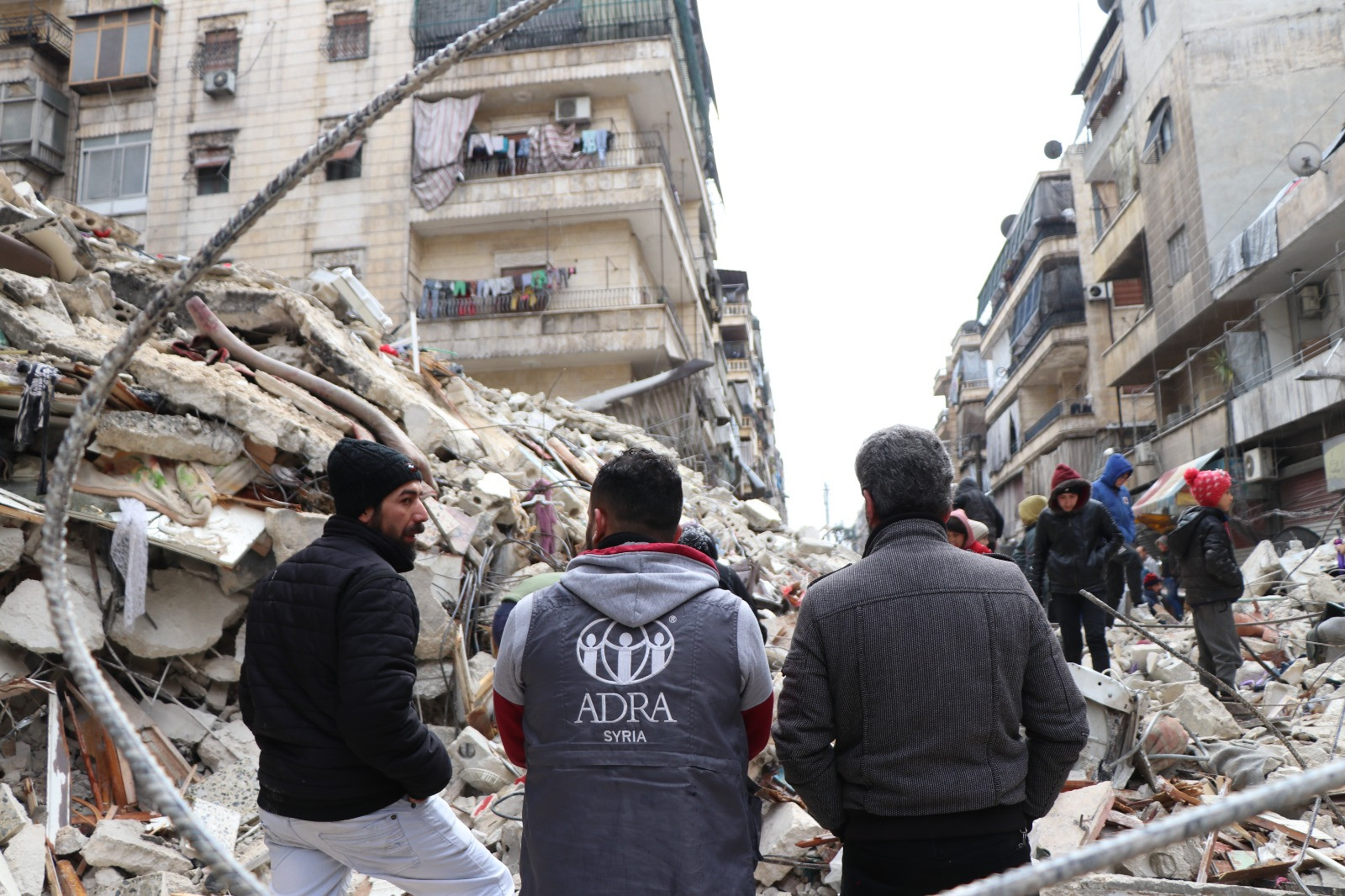
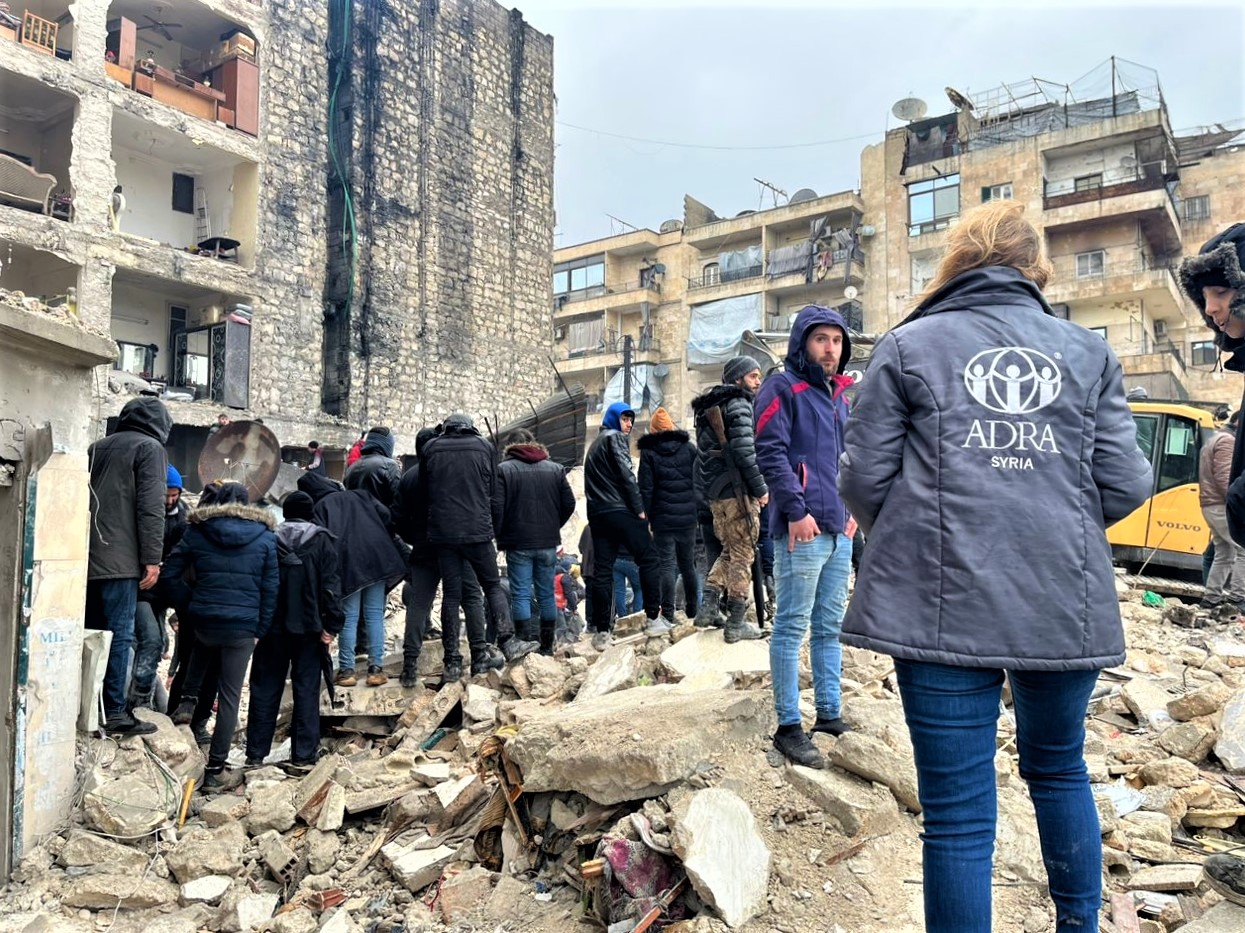
On 6 February 2023, two strong earthquakes with magnitudes of 7.8 and 7.5 struck the Syrian-Turkish border region. These earthquakes mainly affected the provinces of Aleppo, Latakia, Hama and Idleb. Hundreds of thousands of residents have lost their homes, left on the streets, while other families have found temporary shelter in local mosques, schools, churches and other buildings intended to provide temporary accommodation for those affected.
After more than eleven years of a complex crisis in Syria, some water systems have been destroyed or rendered inoperable, preventing communities from accessing safe drinking water and water for irrigation for a long time.
The earthquakes have made the situation in the WASH area even worse. Water supplies are interrupted due to damage to water supply systems and waterworks. In Lattakia itself, serious damage has been reported by water utilities; this included damage to high tanks, water networks and pumping stations, leaving thousands without access to safe and sufficient water. Damage to sanitation systems also resulted in reported pollution of water sources, contaminating available water and rendering it undrinkable.
Initial emergency humanitarian assistance from local, international and UN agencies, including ADRA Syria, which has been operating in the area since the beginning, has ensured that the local population has access to basic needs such as food, sanitation and shelter.
However, now, more than a year after the earthquake, more sustainable and longer-term solutions to critical needs are being implemented. It is the WASH sector that has been identified as both the most vulnerable and the one that requires the mosturgent assistance and intervention given the high level of damage as well as the priority sectors identified and available to ADRA Syria teams.
Activities
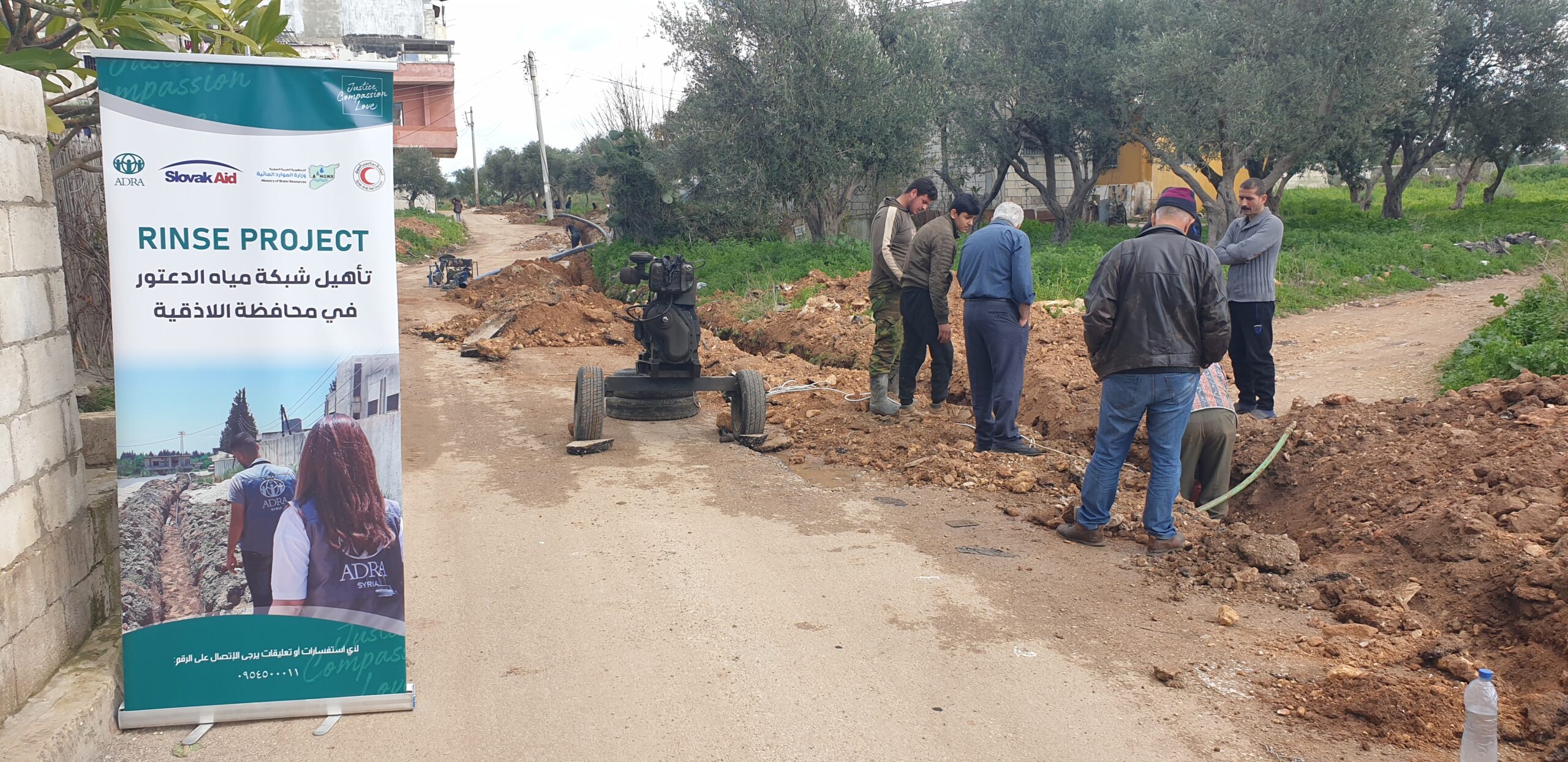
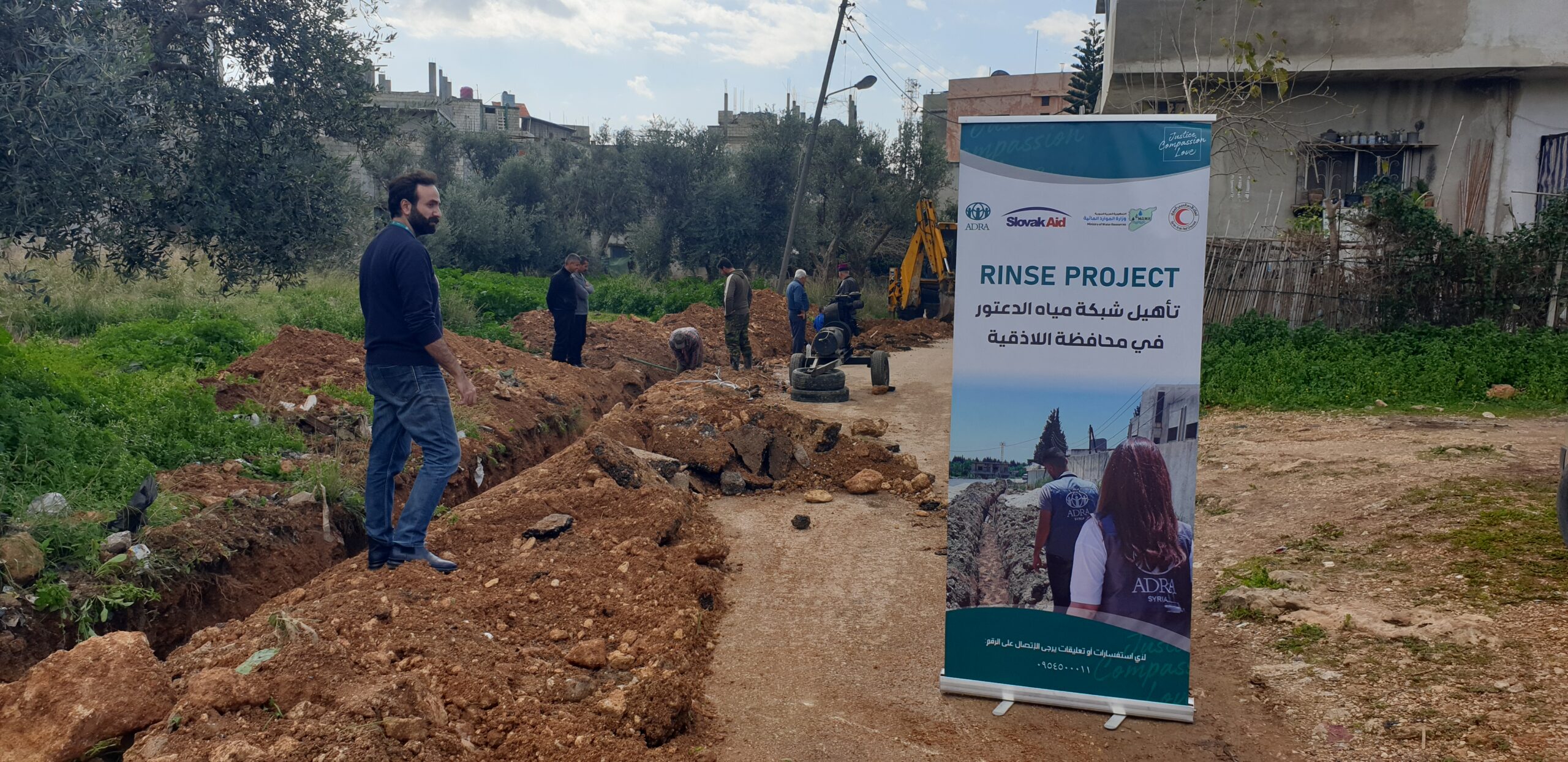
Based on a needs assessment, three sites were selected where 5 990 metres of pipelines will be rehabilitated and 34 000 inhabitants will have access to water.
It was found that in one of the neighbourhoods of Lattakia (Datoor), due to the damage caused by the earthquake, water is not being supplied to households at all, and to others only with very low pressure. Water does not flow continuously in Syria, so people have to fill their water tanks, but without sufficient water pressure, this is impossible. Most people depend on trucks to bring water, which is a heavy financial burden. As many as 26,000 people in the area suffer from water shortages, but thanks to the intervention of ADRA Slovakia in cooperation with ADRA Syria, residents already have access to up to 50 litres of water per person per day.
The village of Al Russasye, located on a hill in the Al Qardahah area, has also been identified. Although the village is connected to a water source, a high reservoir 6 km away, the pipes are damaged and water reaches the village every 10 days for one hour without pressure. With such low pressure, the beneficiaries cannot even fill a gallon of water. The water utility sends a truckload of water for support on a continuous basis. Price of 1 m3 is 50 000 SYP and this amount is sufficient for one family for about 5 days in the best conditions. 1,850 m of pipelines have been rehabilitated, providing 5,000 households with access to up to 60 litres of water per person per day.
The third location where ADRA Slovakia is working in cooperation with ADRA Syria is a village in Karm Al-Maasara in the Al-Haffeh area with approximately 3,000 inhabitants. The main source of water is a pumping station, which is connected to the village by a 20-year-old water network that was damaged by the earthquake and suffers from blockages and malfunctions, as a result of which only about 3 litres per person per day reaches the beneficiaries in the target area. Households rely on rainwater harvesting in tanks, but even then the amount of water is not sufficient. After the pipe rehabilitation, households will receive approximately 20 litres per person per day.
Reconstruction work at three sites has already been successfully completed in 2024, and 34,000 Syrians have gained permanent access to water.
As part of additional project activities, the project was able to help Lattakia residents with waste storage solutions and distribute 58 new metal waste containers with a capacity of 1,600 litres.
Partners:
ADRA Slovakia implements the project in cooperation with a partner organization ADRA Syria. The project activities are financed from Official development assistance of the Slovak Republic within the project SAMRS/2023/HUM/1/5 - Water for Life: Rehabilitation of Water Infrastructure for Earthquake Affected Communities in Syria (RINSE).


 EN
EN  SK
SK